

AI Wearables in 2027: Are Smart Rings, Pins, and Keychain Assistants Worth Buying?
Your phone has become the center of your digital life, but it is not always the most convenient tool. Meetings run long, ideas disappear before you write them down, and checking a screen interrupts real conversations. That gap is why AI wearables have moved from novelty to serious product category. Smart rings, clip-on recorders, pendants, and keychain-style assistants all promise to catch what you would otherwise miss. This review looks at what current devices actually do, where they fall short, and whether they are worth buying as we head into 2027.
What Are AI Wearables?
AI wearables are small devices you wear or carry that use artificial intelligence to record, interpret, or act on information from your body or surroundings. They usually pair with a smartphone app, where most of the processing, storage, and summaries live.
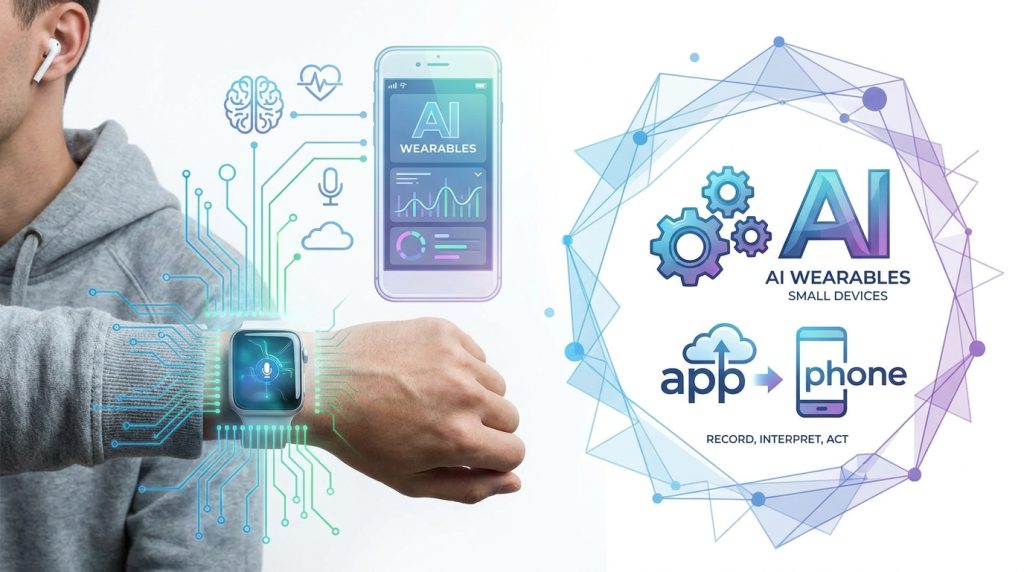
Three main groups dominate the market. Health-focused smart rings track sleep, heart rate variability, and recovery trends. Voice-first capture devices, such as clip-on pins and pendants, record conversations and produce transcripts or summaries. Assistant-style devices, including smart glasses and keychain-style gadgets, aim to answer questions hands-free.
The category has a mixed track record. The Humane AI Pin, which began shipping in April 2024, received largely negative reviews for limited battery life, poor thermal control, and unclear usefulness. Humane’s AI Pin was discontinued in February 2025 after the company’s assets were sold. That history is a useful reminder to judge each device on evidence rather than marketing.
Note on figures: prices and specifications below come from 2026 product pages and reviews checked between late October and early November 2026. Treat them as a snapshot and confirm before buying.
How to Evaluate AI Wearables Before You Buy in 4 Steps

Before you spend money on any of the AI wearables on the market, work through these steps. They follow the same layered logic as a sound digital strategy: solve the foundation problem first, then judge the extras.
- Define the specific problem. Write down the one task you want the device to handle, such as capturing meeting notes, tracking sleep, or getting quick answers while walking. Why it matters: most disappointment comes from buying a general-purpose gadget for an unclear reason. Example: a project manager who attends eight meetings a week has a different need from a student who wants to track sleep.
- Check the full cost of ownership. Look beyond the sticker price to subscriptions, replacement batteries, and required app features. Why it matters: some devices charge monthly fees for core functions. Example: one 2026 comparison lists the Plaud NotePin S at $179 with a free tier and a Pro plan at $99.99 per year, so yearly cost depends on how many transcription minutes you use.
- Test battery life in real use. Manufacturers quote best-case numbers. Why it matters: a device that lasts a day with light use may die by lunchtime with constant recording. Example: one long-term tester reported a smart ring reaching 5.5 days against a claimed 7, with always-on heart rate monitoring enabled. Their AI pin averaged 8.5 hours against a claimed 12.
- Verify privacy and data handling. Find out where recordings and health data are stored, and whether you can delete them. Why it matters: devices that capture audio or biometric data handle sensitive information. Example: before wearing a recorder at client meetings, confirm consent rules and check whether transcripts leave the device.
Smart Rings, Pins, and Keychain Assistants: Which AI Wearables Are Worth It?
Smart Rings for Health and Recovery
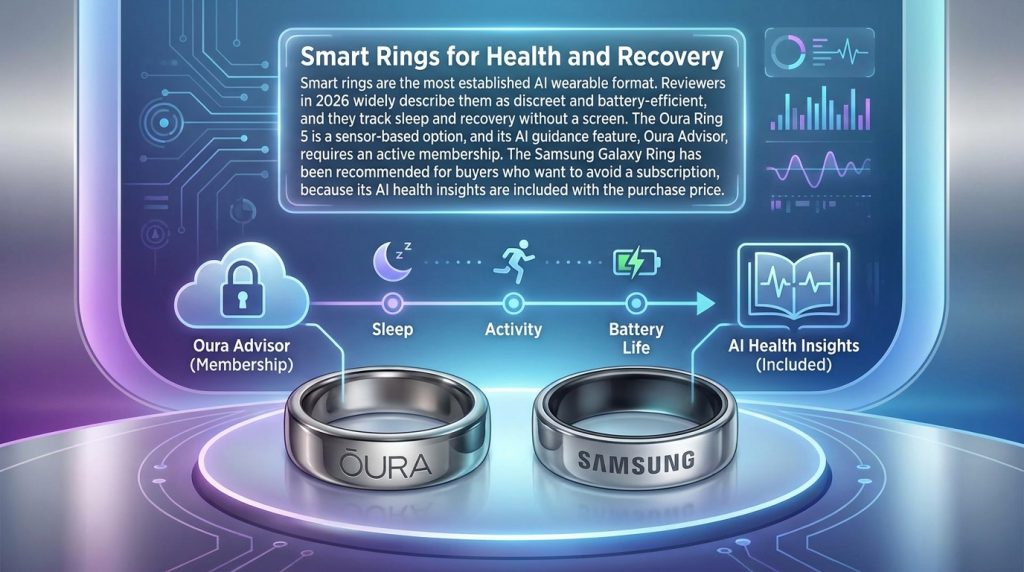
Smart rings are the most established AI wearable format. Reviewers in 2026 widely describe them as discreet and battery-efficient, and they track sleep and recovery without a screen. The Oura Ring 5 is a sensor-based option, and its AI guidance feature, Oura Advisor, requires an active membership. The Samsung Galaxy Ring has been recommended for buyers who want to avoid a subscription, because its AI health insights are included with the purchase price.
Smart rings measure trends, not medical diagnoses. Treat them as wellness tools that can prompt conversations with a doctor, not as substitutes for clinical care.
Clip-On Pins and Recorders for Meetings

Clip-on recorders are the most practical AI wearables for people who spend hours in meetings. The Plaud NotePin S, announced at CES 2026, records conversations, transcribes them, and produces summaries. One review reported roughly 90 to 95 percent transcription accuracy in clear settings with one or two speakers, though accuracy drops in noisy rooms and with many speakers. Accuracy claims in marketing and reviews vary, so test with your own environment before relying on transcripts for legal or client work.
The screenless AI pin category has been harder to win over. The Humane AI Pin’s failure is the clearest example. Newer devices in this space are working to address the same problems with better battery design and narrower features.
Keychain and Pendant Assistants for Quick Capture
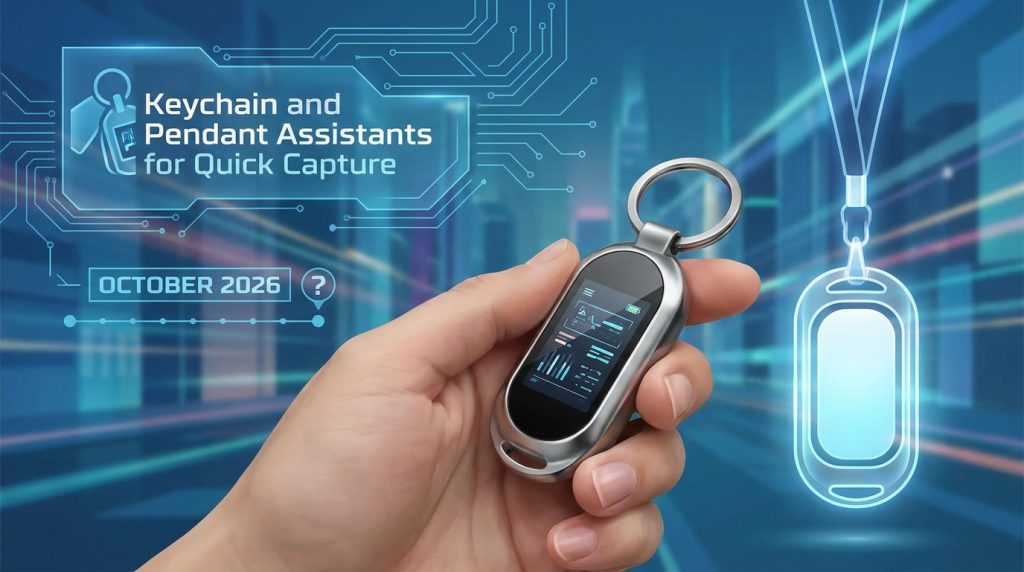
Keychain-style and pendant devices are the newest and least proven. Reports from October 2026 describe a Meta keychain-style device with a small display that had not yet shipped. Meta also acquired the Limitless startup in December 2025 and stopped selling its Pendant, with support continuing through late 2026. Reviewers describe the strongest current use case as voice capture for personal notes rather than full conversation assistance.
Preorders deserve caution. One 2026 guide notes that the Sandbar Stream ring’s Batch 6 was listed as “Shipping January 2027” and that OASIS 1 was scheduled to ship for Christmas 2026. Preorders can slip, so check refund terms before paying.
Smart Glasses as the Assistant Benchmark
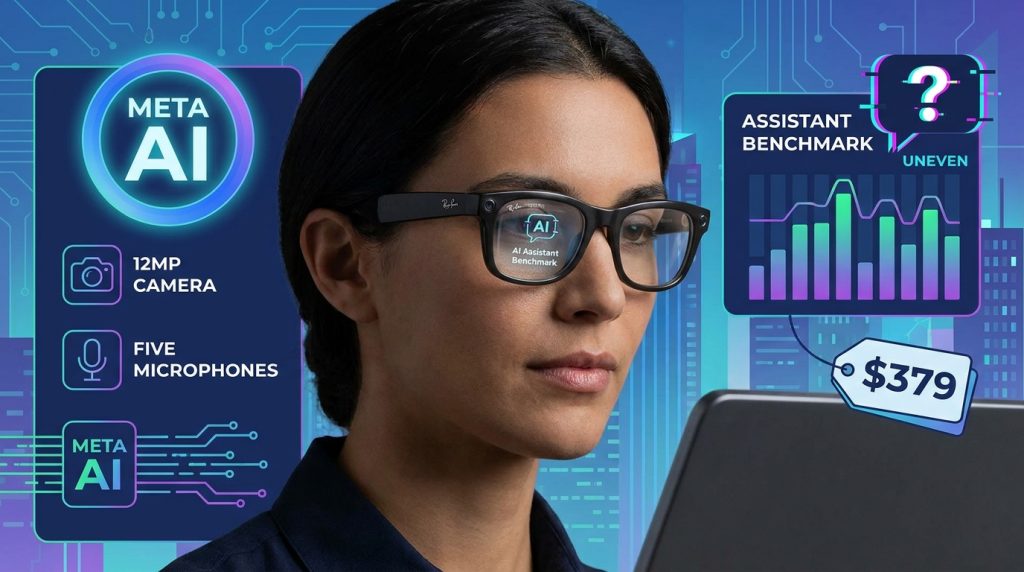
Smart glasses are often grouped with AI wearables. The Ray-Ban Meta Gen 2, priced at $379 in 2026 reviews, is frequently described as the category benchmark for everyday use, with a 12MP camera, five microphones, and Meta AI. Reviewers note the on-board assistant is still uneven.
Common Mistakes to Avoid
- Buying for novelty. Solution: Write down the one task you need solved, then check whether the device does that task well.
- Ignoring subscriptions. Solution: Calculate the first-year total cost, including app fees, before comparing devices.
- Trusting battery claims. Solution: Ask for real-use reviews and test during your first week with a return option.
- Recording people without consent. Solution: Tell participants when a recorder is active, and check local recording laws before you use one at work.
- Pre-ordering without refund terms. Solution: Confirm shipping dates, refund conditions, and cancellation rules in writing.
- Treating health data as medical advice. Solution: Use ring metrics as trends to discuss with a professional, not as diagnoses.
Useful Tips for Beginners
- Start with one device. Choose a single format, such as a smart ring or a meeting recorder, and use it for a month.
- Set a return window test. Only keep a device if it solves the problem you defined.
- Check the app. Many AI wearables depend on the companion app for features, so review app permissions and data settings.
- Keep sensitive recordings local when possible. Use settings that limit cloud storage or allow deletion.
- Compare free tiers first. Some transcription and summary features have monthly limits, so measure your real usage.
- Wait for independent reviews. Devices shipping in early 2027 have little long-term testing, so give them time.
Restricted and Available Countries for AI Wearables
Availability depends on sanctions law, vendor policies, and import rules. Confirm current terms before you buy.
Restricted under U.S. sanctions (as of November 2026): According to the U.S. Treasury Department’s Office of Foreign Assets Control (OFAC), comprehensive embargoes apply to Cuba, Iran, and North Korea, plus the Crimea, Donetsk, and Luhansk regions of Ukraine. Reputable manufacturers generally do not sell or ship to these locations. Sources disagree on Syria’s status, so verify it directly with OFAC before ordering.
Targeted restrictions: Russia, Belarus, and Venezuela face sectoral and list-based sanctions. Some vendors limit shipping, payments, or app access in these markets.
Generally available: Most other countries can buy AI wearables through official retailers, but shipping, warranties, language support, and transcription languages vary. For example, one 2026 review lists 112 supported transcription languages for a clip-on recorder, and that figure may not apply equally in every region. Check each vendor’s supported-country list.
This is general information, not legal advice. For sanctions or import questions, consult a qualified adviser.
Frequently Asked Questions
Are AI wearables worth buying in 2027?
Some are, depending on your needs. Smart rings and meeting recorders have the most evidence behind them today. Keychain and pendant assistants are newer and less proven, so wait for independent testing before spending money on them.
Do AI wearables work without a phone?
Most need a phone for setup, syncing, and many features. A few devices offer limited offline functions, but check each product page before assuming independent operation.
Are AI wearables safe for privacy?
They can be, but it depends on the device and your settings. Review where recordings and health data are stored, whether you can delete them, and whether you need consent from people you record. For health data, the Federal Trade Commission’s guidance on health information privacy explains how consumers and companies should think about data sharing.
Can AI wearables help me earn money?
They can support productivity for freelancers, remote workers, and entrepreneurs by reducing note-taking and admin time. They do not guarantee income, clients, or passive returns, so treat them as tools that save time, not as income sources.
Final Thoughts
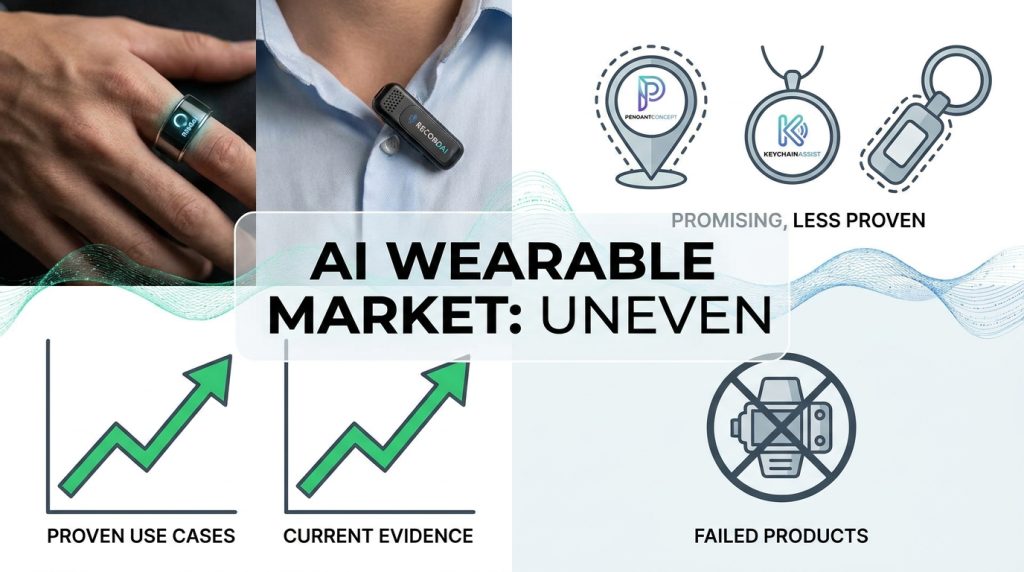
AI wearables are no longer a far-off concept, but the market is still uneven. Smart rings and clip-on meeting recorders have current evidence and clear use cases. Pins, pendants, and keychain assistants are promising but less proven, and some earlier products have failed in the market.
Your next practical step is simple. Write down the one problem you want an AI wearable to solve, check the full cost and privacy terms, and test one device for a month with a return option. The best AI wearables are the ones that quietly solve a real problem, not the ones with the longest feature list.
For more practical guides on remote work tools and digital productivity, visit the remote work tools guide on Digital Task Compass.