
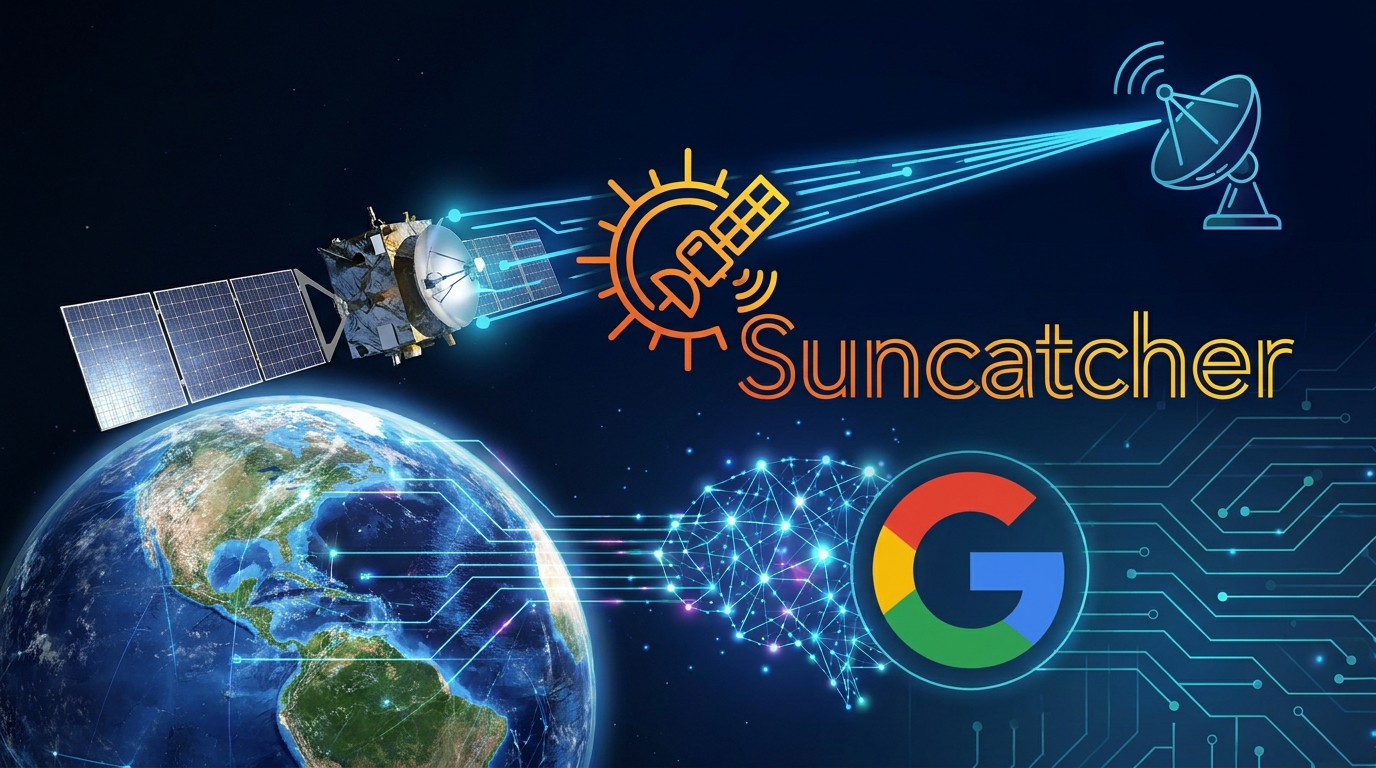
Google Just Got a Surprising First AI Reply : Google Project Suncatcher AI Space Explained
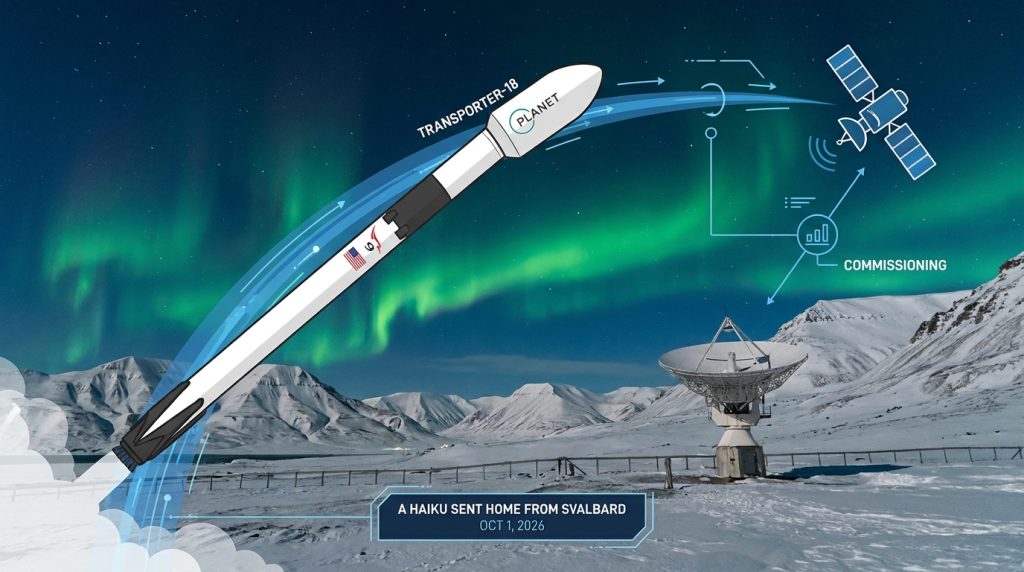
Picture a satellite about the size of a refrigerator sliding over Svalbard, the Norwegian archipelago where the sky is almost always busy with polar orbits. Inside it, four chips that normally sit in Google’s data centers come to life. A prompt travels up from a ground station: write a haiku about being in space. A short while later, the answer comes back down to Earth, four lines long and written by a machine hundreds of kilometres overhead.
That moment is the centre of this story. On October 30, 2026, Google announced that its Project Suncatcher prototype had produced its first AI response from orbit, which the company called a “Hello World” milestone. It’s a small event with a big question behind it. Can the AI that answers our searches, writes our emails and generates our images one day run in space, where sunlight is abundant and there is no cooling water to pay for?
Why should you care if you will never leave the ground? Because the answer touches your electricity bill, the water supply in drought-prone regions, and the cloud services your work probably depends on. Project Suncatcher is a glimpse of how the tech industry might try to solve those problems, and it’s worth understanding what has really happened and what hasn’t.
A Haiku Sent Home From Svalbard
project suncatcher google
Most of the drama around this mission is quiet, technical and slow. The satellite launched on October 1, 2026, riding as a passenger on a SpaceX Falcon 9 rideshare mission called Transporter-18, built in partnership with the satellite imagery company Planet. For weeks afterward, the team worked through commissioning, the checks that confirm a spacecraft is alive and behaving.
Then came the first test. According to Google, the team uploaded a prompt to an onboard copy of Gemma 4, the company’s open-weight model family, during a ground-station pass. As the satellite flew over Svalbard, the response came back down. Travis Beals, Google’s senior director and the lead of Project Suncatcher, framed it as a checkpoint rather than a finish line.
Think of it like an old ship’s radio operator in the early twentieth century, sending a telegram across an ocean and waiting, tense, for the reply to crackle through. Nobody on that ship was getting rich from one telegram. But the reply proved the wire worked. The haiku is Google’s version of that crackle.
Why the Sun Is the Real Star of the Story
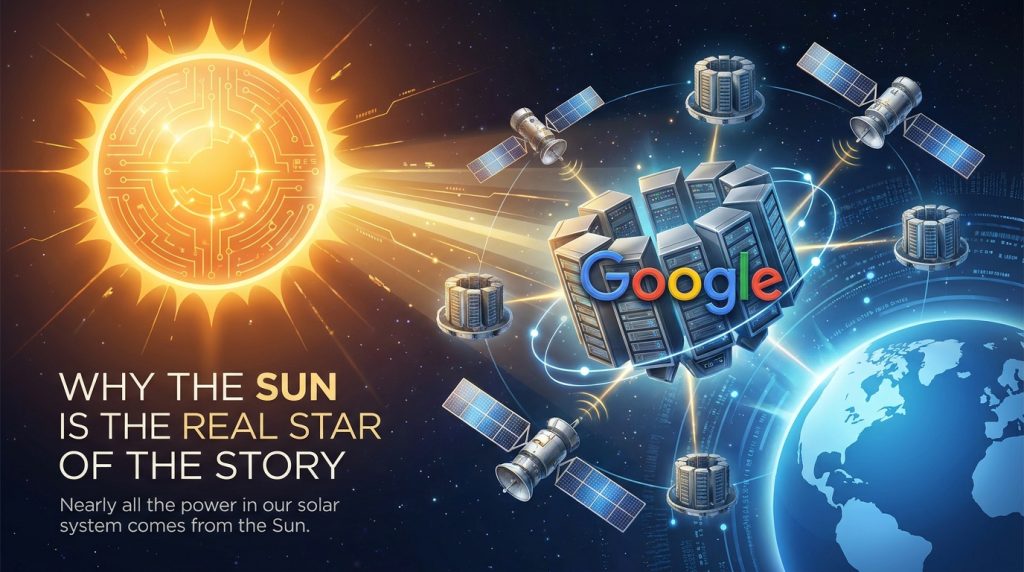
The reason for putting computers in orbit starts with energy. Google’s research team argues that the Sun is the most powerful energy source in our solar system, and that it emits far more power than humanity uses in total. Beals put it plainly in interviews with NPR: nearly all the power in our solar system comes from the Sun, and every other source humans have tapped is a tiny fraction by comparison.
A solar panel on your roof is limited by night, clouds and the angle of the sky. A satellite in the right kind of orbit can see sunlight far more consistently. Google’s research describes a design where many small satellites, each carrying Google’s Tensor Processing Units, or TPUs, fly in a tight formation and link with laser beams. The energy comes from sunlight, the cooling becomes a problem for engineers, and the data moves between satellites through optical connections instead of cables.
This is why the company’s original research post, published in November 2025, framed the project as a moonshot. It isn’t a product launch. It’s a set of questions: can the hardware survive the trip, can it run modern AI models, and can a group of satellites talk to each other fast enough to act like one data centre?
Here is the part that deserves a careful pause. Google’s claims about the Sun’s output are a reasonable physical argument, but they describe what sunlight could supply in principle. They don’t tell us whether launching and running such systems will be cheap enough to compete with buildings on Earth. Those are separate questions, and the company itself says they remain open.
Heat, Radiation and the Problem Nobody Mentions First
project suncatcher google
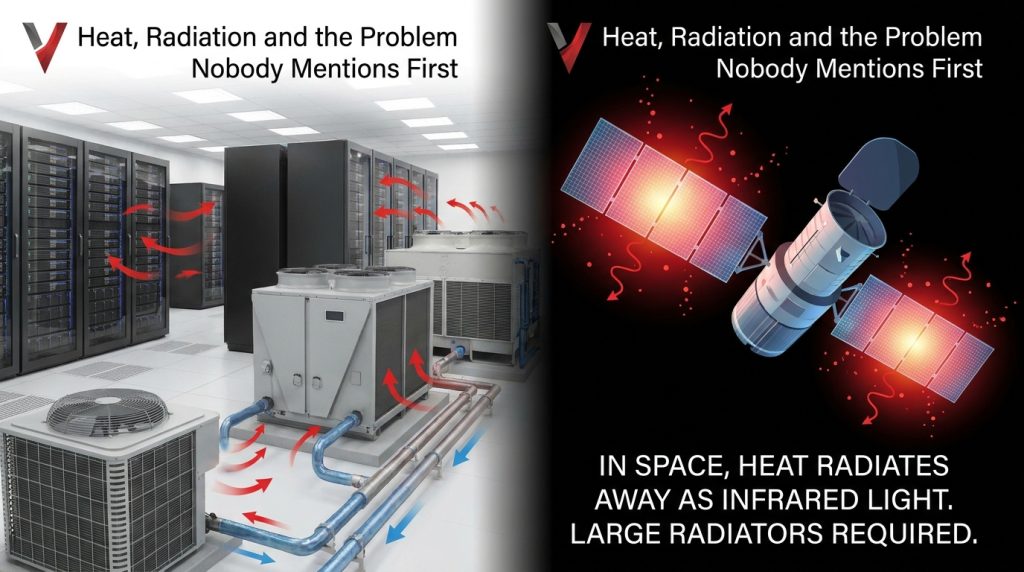
If sunlight is the appeal, heat is the enemy. On Earth, a data centre full of chips gets rid of its heat with air, water and big industrial cooling systems. In space there is no air to carry warmth away. Heat can only leave a satellite by radiating away as infrared light, which means building large radiators.
Carnegie Mellon University professor Brandon Lucia told NPR that a satellite that uses more power to compute has to dump more heat into a confined space. Google’s own blog post calls cooling the chips a crucial research challenge, and it describes ideas such as pipes and radiators that carry heat away from the processors. Beals said radiators are among the heaviest parts of the current prototype, and heavier objects cost more to launch.
That’s why the prototype’s operating sessions are short. Reports from the launch say the chips run Gemma for about 15 minutes at a time to manage heat, and the mission is designed to test how the chips handle thermal stress and radiation over time. Google says it will keep running tests on those factors in the months ahead.
The radiation question is just as important. Space is full of charged particles that can flip bits in memory or damage circuits. Engineers can shield hardware and use components designed to tolerate these hazards, but each layer adds weight and cost. Every solution makes the satellite heavier, and weight makes the launch more expensive. Much of the engineering challenge in Project Suncatcher comes down to that trade-off.
The Word “First” Deserves a Second Look
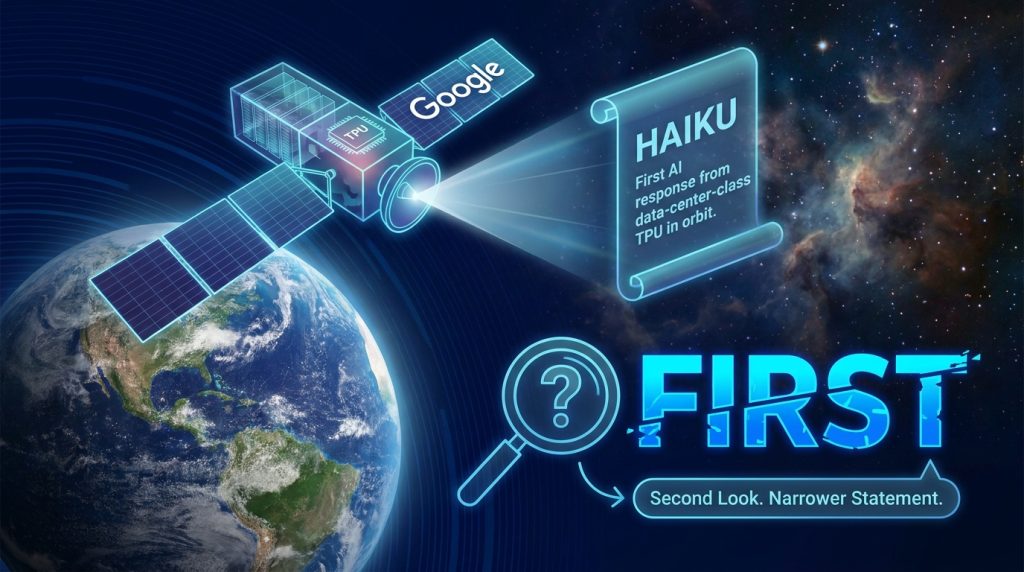
Headlines love the word “first,” and this one is no exception. Google’s claim is specific, and it’s worth reading carefully. In its October 30, 2026 post, the company said the haiku was the first AI response from a data-center-class TPU operating in orbit. That is a narrower statement than “the first AI from space.”
The distinction matters because it isn’t the first time an AI model has run in orbit. In November 2025, a venture-backed startup called Starcloud launched a spacecraft carrying an Nvidia H100 chip and demonstrated a version of Google’s Gemini AI from space, according to NPR’s reporting. So the record belongs to a field, not to one company, and Google’s milestone is best understood as a step on a longer path.
The honest way to see this is that Google has shown one satellite, running one model, answering one request, with a single downlink pass as proof. Beals and his team have been open about how small the test is. As of early November 2026, there is no public data on how the prototype handles months of radiation or repeated thermal cycles, and that’s where the real evidence will come from.
What This Means for Readers Who Never Leave the Ground

Let’s bring this down to earth, because most of us are not running a space programme. Suppose you are a freelance data analyst in Singapore who relies on cloud servers to crunch client spreadsheets every week. Or imagine a small design studio in Manchester that pays a monthly bill for image-generating tools, or a remote developer in Auckland who runs test environments on rented capacity. For all of them, the cost and availability of computing power shape what they can afford to build.
Right now, the main pressure on that computing power comes from electricity and water. Data centres need large amounts of both, and in some regions they have become a political issue. NPR reported in October 2026 that opposition to power-hungry data centres on Earth is growing. Google’s spending on infrastructure is also enormous. Sundar Pichai told attendees at the company’s developer summit in May 2026 that demand for AI services exceeds supply, and the company expects its 2026 capital spending to fall between $180 billion and $190 billion (a figure reported by NPR, current as of its October 2026 story).
If space-based computing ever matures, the benefit for ordinary users might be indirect: more capacity without the same pressure on local grids. But that’s a hopeful projection rather than a forecast. Nobody has shown that space computing will be cheaper or easier to access. Treat the upside as a possibility and keep an eye on the price tags.
Your own working life may also feel the ripple. Engineers in satellites, chip design, cooling systems and energy will be in demand whatever happens with orbital data centres. That doesn’t guarantee any particular job or salary, and anyone planning a career move should look at current job listings and credible labour market data rather than headlines.
The Myth of the Cloud Floating Overhead
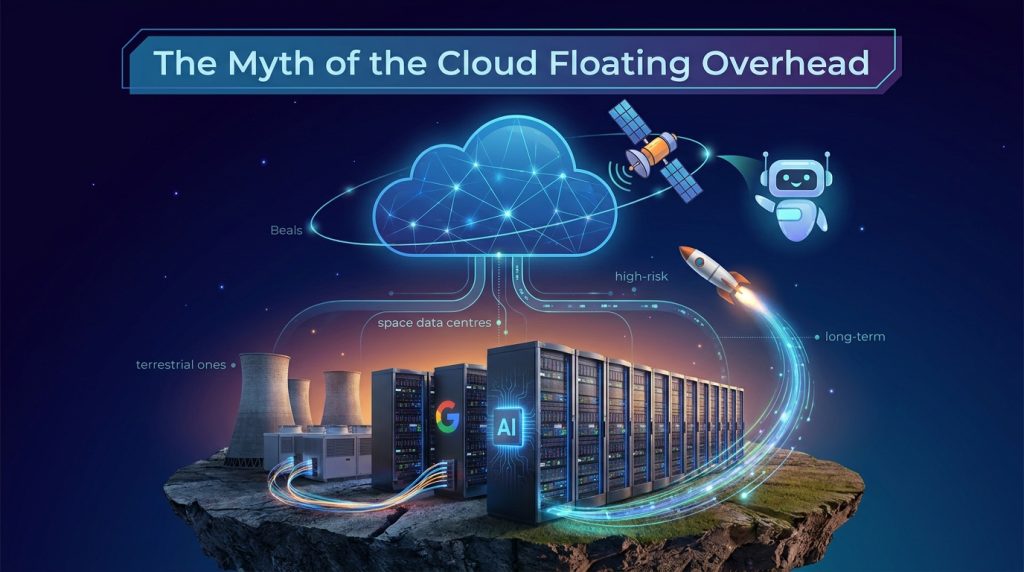
The most common misunderstanding is that your next chatbot reply will soon come from a satellite. It’s an understandable leap. The word “cloud” already sounds like something floating above us, and a headline that says “AI reply from space” makes the story feel close. But the reality is much more modest.
Beals has been clear that space data centres will not replace terrestrial ones any time soon. He expects use cases that make more sense on Earth and others that make more sense in orbit, with both coexisting for a long time. He also said he doesn’t see space computing becoming cheaper in the next five years, and suggested it will take longer than that. Google’s research has described the project as high-risk and long-term.
Other companies have bigger timelines and bolder claims. SpaceX has said, according to an SEC filing cited by NPR, that it expects to start deploying orbital AI compute satellites as early as 2028. Such statements are company forecasts, not confirmed plans, and they should be read with the same caution as any corporate prediction.
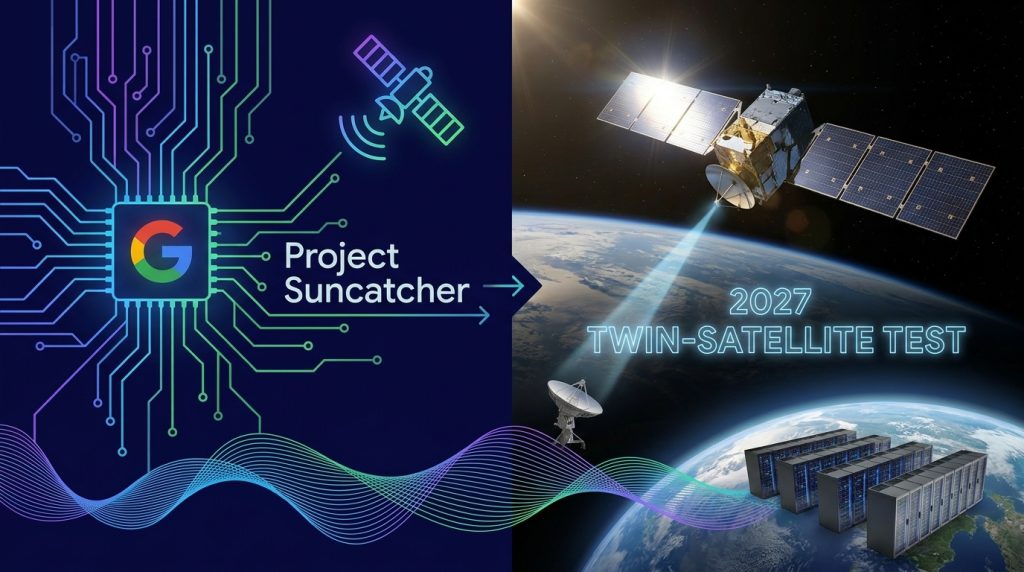
So the accurate picture is this: one satellite has run one AI model and returned one haiku. The next step is a pair of satellites linked by lasers, planned for 2027. Anything beyond that is a question for later years.
Frequently Asked Questions
What is Project Suncatcher from Google?
Project Suncatcher is a Google Research moonshot that explores whether networks of solar-powered satellites, carrying Google’s TPU AI chips, could one day handle large-scale machine learning computing in orbit. It was announced in November 2025 and remains at an early research stage.
Did Google really get the first AI response from space?
Google says its Project Suncatcher prototype returned the first AI response from a data-center-class TPU in orbit, announced on October 30, 2026. Other companies, including Starcloud, have previously run AI models in space, so the claim is narrower than “first AI ever from space.”
When will Google’s space data centres be ready?
Google plans to launch two interconnected prototype satellites in 2027 to test the laser links between them. Beals has said space computing is unlikely to be cheaper than Earth-based data centres for at least the next five years, so a commercial service is not expected soon.
Will space data centres make AI cheaper or greener for me?
That’s unknown. The idea is to use continuous sunlight and reduce pressure on Earth’s land, water and grids, but cost, launch emissions and reliability are still open questions. Treat it as a long-term research direction rather than a near-term fix for your bills.
Final Thoughts
A four-line haiku sent back from orbit doesn’t change your life this week. It does show that a Google chip can survive a rocket ride, switch on in the vacuum of space and talk back to the ground. That is a small, real step on a very long road.
The most useful way to read Project Suncatcher is as a question the tech industry is now taking seriously: where will the power for artificial intelligence come from in the decades ahead? Whether the answer ends up in orbit or on the ground, the trade-offs around energy, heat and cost will shape the tools we all use. Keep an eye on the 2027 twin-satellite test, and if this topic caught your curiosity, share it with a friend who loves a good space story. We’ll keep following the signal.
For more stories on the technology behind the tools you use every day, explore our technology and AI stories on Digital Task Compass.