7 Dangerous AI Scams for Freelancers and How to Spot Them
A client emails with a generous project, the video call looks legitimate, and the contract arrives quickly. Then a request to change the payment account or pay for a “test” arrives, and something feels slightly wrong. Freelancers are attractive targets because they work independently, invoice quickly, and often handle money without a finance team checking the details. AI scams for freelancers are now more convincing than the clumsy emails of a few years ago, because the same tools that help you write proposals can also imitate voices, faces, and writing styles.
This guide walks through seven common scams, one step at a time. For each one, you’ll learn what to look for, how to verify the situation, why the warning sign matters, and a practical example. You don’t need technical skills to protect yourself. You need a short checklist and the habit of verifying before you act.
What Are AI Scams for Freelancers?

AI scams for freelancers are fraud attempts that use artificial intelligence to make a fake client, recruiter, platform, or payment request look real. Some scammers write messages with AI, which removes the spelling and grammar errors that once made phishing easy to spot. Others clone a person’s voice from short audio clips, or use real-time video filters to appear as someone else during a call.
The goal is usually the same as older scams. Scammers want your money, your login details, your bank information, or your willingness to install something you shouldn’t. What has changed is the polish. A message can look professional, reference your real portfolio, and sound like someone you’ve worked with before.
The U.S. Federal Trade Commission publishes consumer alerts about impersonation and job scams that remain useful for freelancers in any country. Its guidance is consistent: unexpected urgency, requests for payment, and pressure to move off a trusted platform are warning signs, regardless of how convincing the message looks.
Step-by-Step Guide
Work through these seven scams in order. Each step explains what the scam looks like, how to check it, why it matters, and an example you can adapt.
Step 1: Spot the Deepfake Client Call
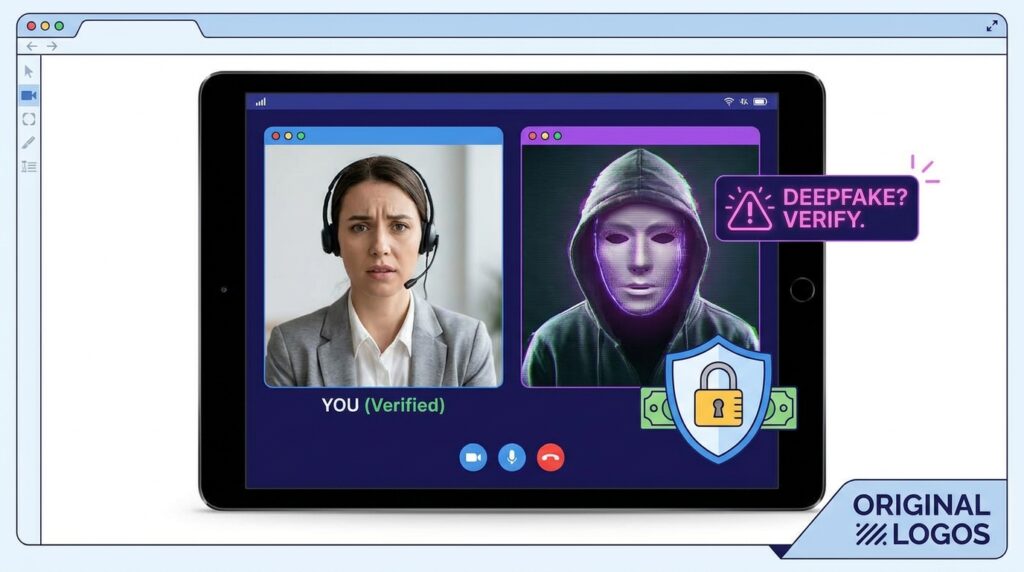
What to do: Treat any video or voice call with a new client as something you need to verify, especially if money or account details come up.
How to do it: Ask the person to join from their company email address, not a personal one. Check the company website and the domain of the email. Look for a second channel, such as a phone number from the company’s official site, to confirm the project. If the video looks slightly unnatural, ask the person to turn their head, hold up an object, or move a hand in front of their face, and watch whether the image breaks up.
Why it matters: Real-time face and voice tools can make a fake client look and sound trustworthy. A short verification step costs you a few minutes and can prevent a loss that takes months to recover from.
Example: A freelance copywriter is offered a large project by a “managing director” on video. When she asks for a call back to the company’s listed phone number, the director suddenly becomes unavailable, and the project disappears. The verification step revealed the problem.
Step 2: Recognize Fake Job and Gig Postings

What to do: Check every new gig or job posting before you apply, reply, or send personal information.
How to do it: Look up the company independently, confirm it has a real website and contact history, and search for reviews from people who have worked with it. Be wary of postings that ask you to pay for training, software, equipment, or background checks. Legitimate clients do not ask freelancers to pay to start a project.
Why it matters: AI can generate detailed, believable job descriptions at scale. Fake postings often target freelancers because they are eager to find work, and an upfront payment request is one of the clearest red flags.
Example: A web designer is invited to a “paid onboarding” for a gig platform that requires a $80 software license before work begins. The request is the warning sign. Real clients pay the freelancer, not the other way around.
Step 3: Watch for Overpayment and Check Scams
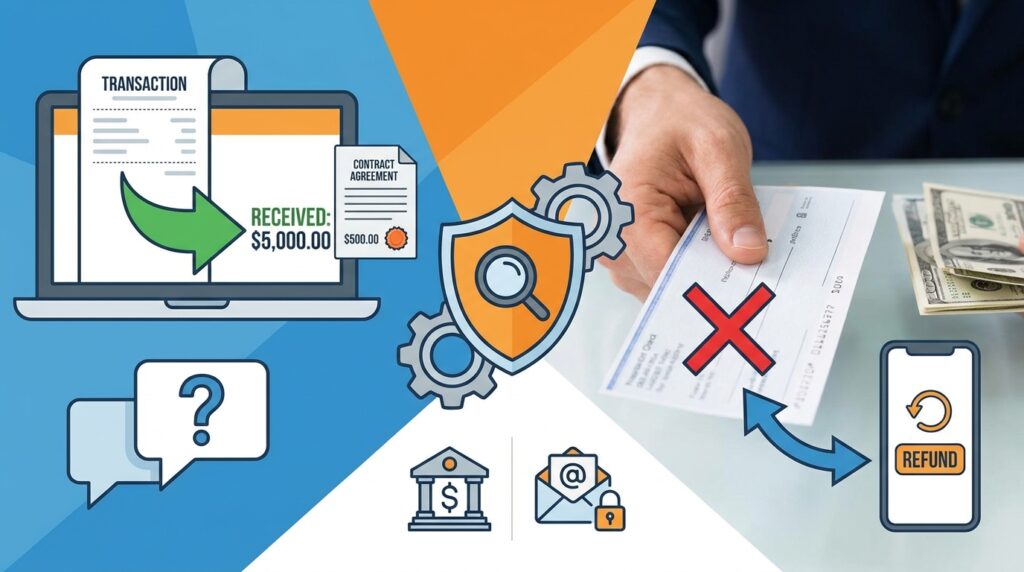
What to do: Be cautious when a client sends a payment larger than the agreed amount and asks you to send back the difference.
How to do it: Do not refund any money until the payment has fully cleared in your account, which can take several days for paper checks and some transfers. Ask your bank to confirm that the funds are cleared, not just pending. Keep the original agreement and compare the amount with what was promised.
Why it matters: Fake checks can look authentic and may appear in your account for a short time before the bank reverses them. If you send money back, you may be responsible for the shortfall.
Example: A translator receives a check for $3,200 for a $2,400 project and is asked to send back the $800 difference. She checks with her bank, learns the check has not cleared, and declines the refund request.
Step 4: Avoid “Test Projects” That Run Unknown Code
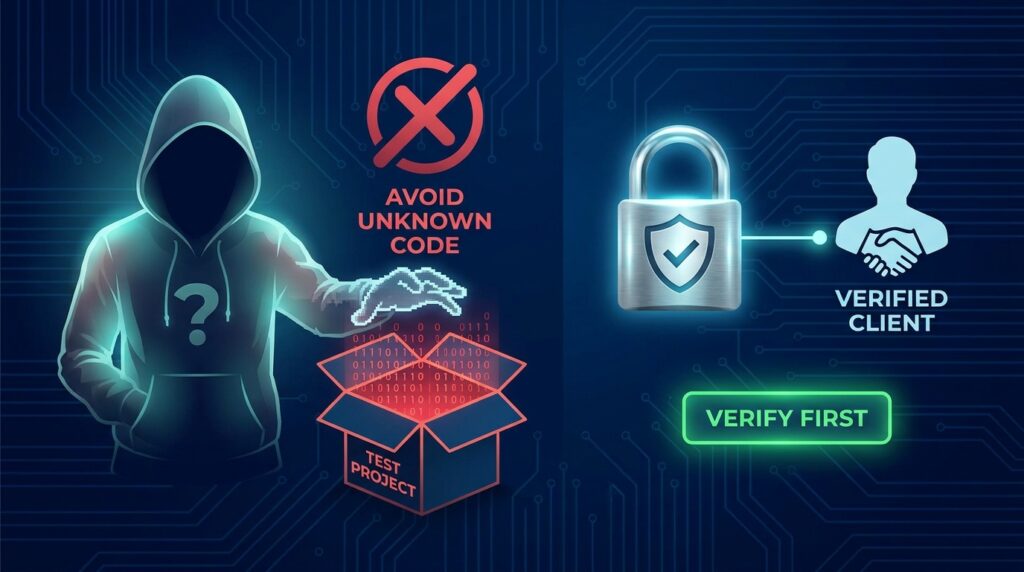
What to do: Do not run code, install software, or open files from a stranger as part of a “test” before you have verified the client.
How to do it: If a client asks you to download a repository, run an unfamiliar package, or open an attached file to complete a task, pause and verify the client first. Use a separate, isolated environment for any unknown files, and keep your system updated with security software from a reputable provider.
Why it matters: Fake coding tests and attachment-based assessments can hide malware that steals passwords and access to your accounts. Developers and designers are common targets because their work often involves downloads.
Example: A developer is asked to run a “skills test” from a GitHub repository linked by a recruiter he has never spoken to. He checks the recruiter’s identity first, finds no matching company, and does not run the code.
Step 5: Question Urgent Payment and Bank Detail Changes
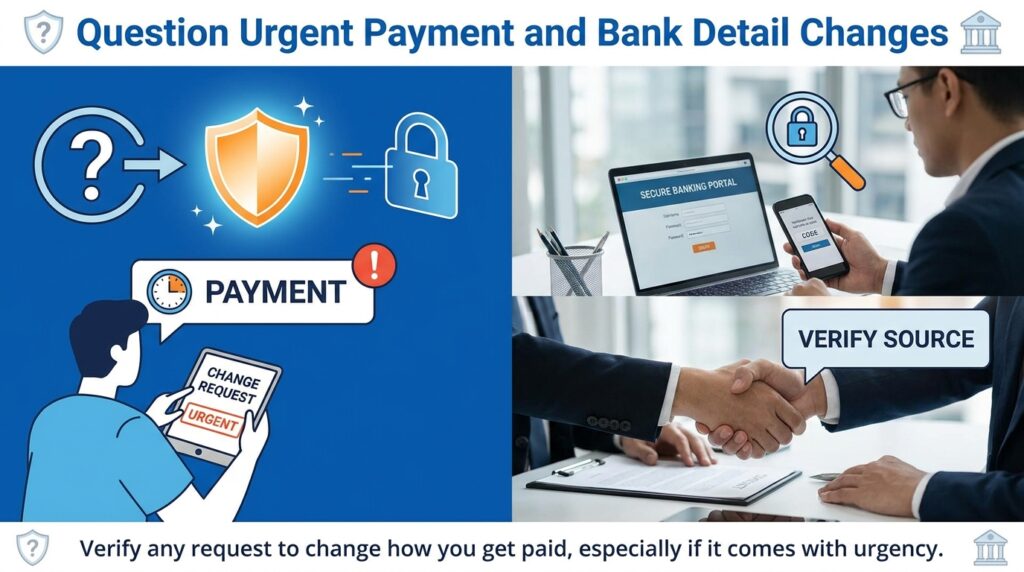
What to do: Verify any request to change how you get paid, especially if it comes with urgency.
How to do it: Confirm the change using a method you already trust, such as calling the contact at a phone number you have used before, not one supplied in the message. Be cautious about requests that come by voice call or video call, even when the voice sounds familiar. Keep a simple written record of your payment details and update them only through your own verified process.
Why it matters: Scammers often impersonate clients or managers and pressure freelancers to act quickly. Voice cloning makes phone confirmation less reliable than it once was, so check through a second channel.
Example: A freelance editor receives an urgent voice message from a long-term client asking him to send his next invoice to a new account because of an “internal audit.” He calls the client using the number from their previous contract, and the client confirms that no change was made.
Step 6: Identify Fake Investment and Task Schemes
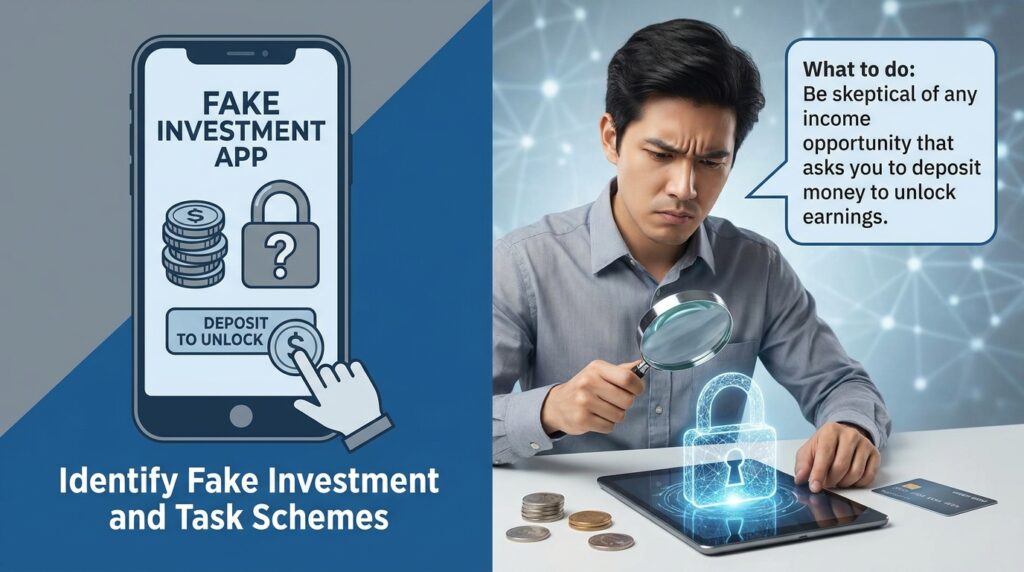
What to do: Be skeptical of any income opportunity that asks you to deposit money to unlock earnings.
How to do it: Watch for offers that promise quick rewards for rating products, completing simple tasks, or “boosting” accounts. Real freelance work doesn’t require you to deposit funds to unlock payments. Search for the company’s name with words like “scam” or “complaints,” and check any regulator listed on its website.
Why it matters: These schemes often start with small early payouts to build trust, then ask for larger deposits that disappear. The early wins make the scam feel legitimate, which is why it can be so damaging.
Example: A remote worker is offered a “data labeling” role paying small rewards for each task. After a few payouts, he is asked to deposit $500 to unlock higher-paying tasks. He recognizes the pattern and stops.
Step 7: Protect Your Identity From Impersonation

What to do: Limit the public audio, video, and personal information that scammers can use to imitate you.
How to do it: Review your public profiles, podcast appearances, and social media posts. Remove sensitive details like your home address, date of birth, or full contact numbers. Turn on multi-factor authentication for your email, banking, and freelance platform accounts. Tell close contacts that scammers may imitate you and ask them to verify any unusual requests.
Why it matters: Scammers build convincing attacks from information they find online. Reducing what is public makes it harder for them to impersonate you to your clients or your family.
Example: A consultant who posts weekly video updates adds a line to her LinkedIn profile telling clients she will never ask for payment changes over messaging apps or voice notes.
Common Mistakes to Avoid
Assuming only beginners are targeted. Experienced freelancers are often targeted with high-value projects, because the rewards are larger. Solution: Apply the same verification steps to every new client, regardless of experience.
Trusting a familiar voice or face. AI can imitate both. Solution: Confirm through a separate channel before you act on any request involving money or account access.
Feeling rushed by urgency. Scammers use deadlines to stop you from thinking clearly. Solution: Give yourself a set period, such as 24 hours, before sending money or changing payment details.
Sharing your personal information too widely. Oversharing gives scammers material to make their messages convincing. Solution: Review your public profiles every few months and remove details you don’t need to share.
Ignoring small warning signs. A slightly unusual email address or a vague project brief can be the first clue. Solution: Write down anything that feels off and check it before continuing.
Skipping security basics. Weak passwords and no multi-factor authentication make account takeover much easier. Solution: Use a password manager and turn on multi-factor authentication for every important account.
Useful Tips
- Create a verification checklist. Include company website check, independent contact method, and payment details confirmation. Use it for every new client.
- Use your platform’s payment system. Keeping payments inside a trusted platform or a documented contract makes disputes easier to resolve.
- Save your official contact details. Store client phone numbers and email addresses from signed contracts, not from messages you receive later.
- Report suspicious contacts. Reporting to the FTC in the U.S., Action Fraud in the UK, or your national fraud agency helps others avoid the same scam.
- Talk to other freelancers. Professional communities often share recent scam patterns before they spread widely.
- Keep records of every project. Contracts, emails, and payment confirmations make it easier to prove what was agreed if something goes wrong.
If you want more practical guides on protecting your digital work and building safer online income habits, the practical digital skills guides at Digital Task Compass cover related topics in more depth.
Frequently Asked Questions
Are AI scams for freelancers increasing?
Official agencies have warned repeatedly about AI-enabled impersonation and job fraud. Exact figures change from year to year, so check the latest reports from the Federal Trade Commission or your national fraud agency before relying on any number.
Can a scammer really clone my voice?
Voice cloning tools can imitate a voice using relatively short audio samples. Warnings from U.S. state attorneys general and federal agencies advise treating voice-only requests for money or account changes as something to verify through another channel.
What should I do if I already sent money?
Contact your bank or payment provider immediately, ask whether the transfer can be recalled, and change any passwords from a device you trust. Report the scam to your national fraud reporting service and keep copies of all messages.
Do legitimate clients ever ask for payment changes by phone?
Some do, but you should always confirm through a trusted contact method before updating anything. A legitimate client will not object to a verification call.
Can staying alert help me earn more income?
Protecting yourself helps you avoid losses, which keeps more of your earnings. It does not guarantee clients, income, or specific results.
Final Thoughts

AI scams for freelancers succeed when they create urgency, imitate trusted people, and skip the verification step. The defense is simple, though it takes discipline: verify new clients, question payment requests, avoid unknown downloads, and keep your personal information private. Those habits protect your income and your reputation, and they cost very little time.
Choose one client, job, or payment request this week and run it through the checklist from this guide. Confirm the contact through a separate channel, review the payment details, and write down what you learned. That single habit is the most effective defense against AI scams for freelancers you will ever build.