
How to Stop Procrastinating: 8 Strategies That Actually Work
Procrastination isn’t a personality flaw, a sign of laziness, or something you fix by “trying harder.” It’s a predictable emotional response to a task that feels too big, too vague or too uncomfortable to start. That’s why willpower-based advice on how to stop procrastinating fails so often: it treats a feeling problem like a discipline problem. The strategies in this guide treat it like what it actually is — and that’s why they work.
Below are 8 proven, science-backed strategies on how to stop procrastinating in daily work, with a final section on when procrastination signals something deeper. Pick two to start; you don’t need all eight at once.
Why We Procrastinate in the First Place
Research on procrastination consistently shows that procrastination is mostly about managing negative emotions around a task — boredom, anxiety, self-doubt, overwhelm — not about poor time management. Putting off the task delivers immediate emotional relief; the cost (stress, lower quality work, guilt) comes later. Your brain takes the short-term win every time.
That’s why most procrastination advice fails. “Just start” doesn’t help when the reason you’re not starting is emotional, not logistical. Effective strategies on how to stop procrastinating address the emotion first, then the task.
Strategy 1: Make the First Step Absurdly Small
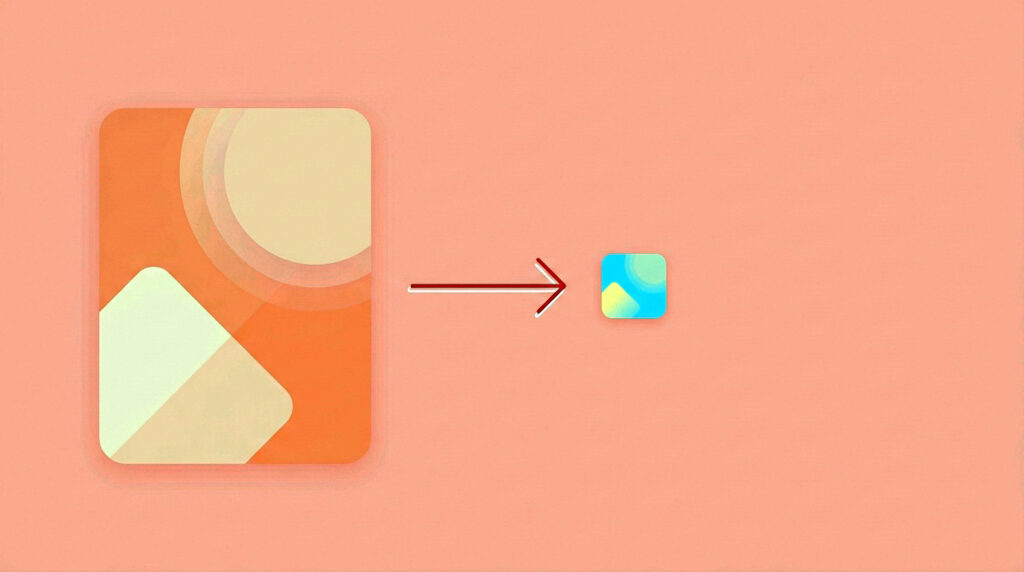
The single most effective anti-procrastination move is shrinking the task until starting feels trivial. Not “work on the report” — “open the report document.” Not “go for a run” — “put on running shoes.” The smaller the first step, the less emotional resistance there is to taking it.
This is the same logic behind the 2-minute rule, and it works because momentum is far easier to continue than to create. Almost always, once you’ve taken the tiny step, you keep going.
Strategy 2: Remove the Friction Around the Task
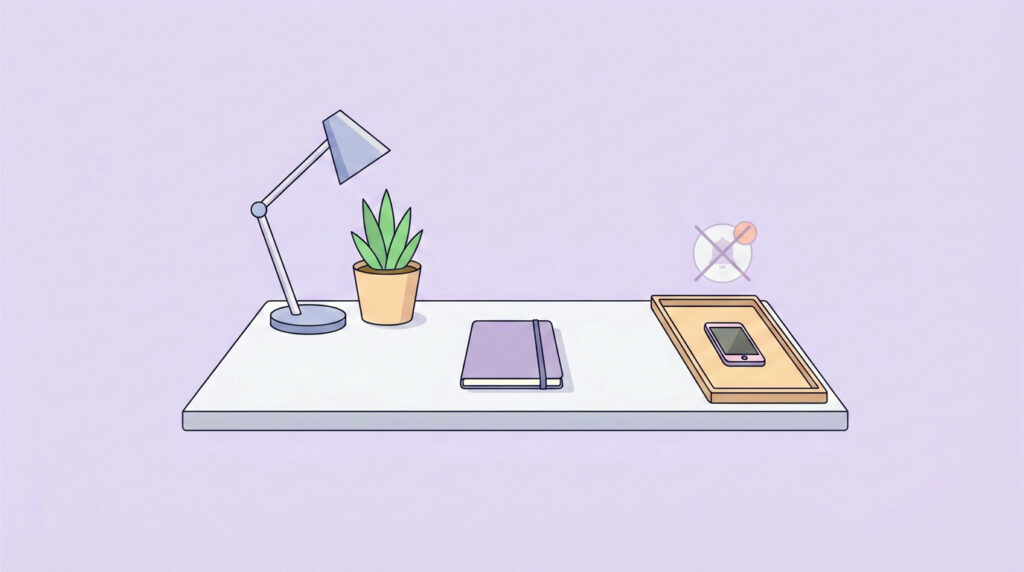
Every small obstacle between you and starting compounds your resistance. Closed laptop, lost notes, missing files, the wrong browser tab, distracting notifications — each one becomes a tiny excuse to do something else.
The fix is environmental. Set up the workspace the night before: file open, tabs ready, phone in another room, distractions off. Removing friction is one of the most underrated strategies on how to stop procrastinating because it requires no willpower at the moment of starting — you front-loaded the willpower the day before.
Strategy 3: Use Time Blocks and Sprints
When the task feels too big, the time often feels too long. A vague “I’ll work on this today” creates more anxiety than a specific “I’ll work on this from 9:30 to 10:00.” Defined start and stop times shrink the commitment to something your brain can accept.
Pair this with the pomodoro technique — short focused sprints with built-in breaks —, and you have a structure that makes starting easy and stopping guilt-free. The end is always close, so the beginning feels lower-stakes.
Strategy 4: Reframe the Task Emotionally
Often what you’re avoiding isn’t the task — it’s a fear underneath it. Fear of doing it badly, of being judged, of finding out you can’t do it. Naming the actual emotion takes a surprising amount of its power away.
Try this: write down what you’re avoiding, and then ask, “What am I really afraid of about this?” The answer is usually more specific than the original task — and far more workable. The freelancer asking how to stop procrastinating on a proposal is often actually procrastinating on the vulnerability of being judged. Once that’s named, the proposal itself is just words on a page.
Strategy 5: Tackle the Worst Task First
James Clear summarizes this principle clearly: your hardest task isn’t getting easier by waiting. Doing it first — when your willpower and focus are highest — works far better than letting it loom over your day until afternoon, when you’re tired and dreading it.
The phrase “eat the frog” comes from Mark Twain via Brian Tracy: do the ugliest task of the day first, and the rest of the day is downhill. It’s one of the oldest strategies for stopping procrastination because it consistently works.
Strategy 6: Make Your Progress Visible
Hidden effort is fragile. The moment you can see your streak, your progress bar, or your checkmarks, you start protecting it.
Simple visible-progress tools: a paper habit tracker with a row of checkboxes, a Notion database with a status column, or a gamified tracker like Habitica that turns habits into a small RPG. The mechanism is the same — you’re externalizing your progress so it stops being just a vague feeling in your head.
Strategy 7: Forgive Yourself for Past Procrastination
Counter-intuitively, beating yourself up over procrastinating increases future procrastination. The guilt becomes another negative emotion you’d rather avoid — and avoiding it often means avoiding the task again.
Studies on self-forgiveness in procrastination find that people who genuinely let go of yesterday’s procrastination are less likely to procrastinate today. The frame to use: “I procrastinated yesterday. That’s done. Today’s a fresh window.” It sounds soft; it’s strategically the most effective approach in the research.
Strategy 8: Track and Reflect Weekly
Once a week, spend five minutes asking: when did I procrastinate this week, and what triggered it? You’ll see patterns within a month — certain tasks, certain times of day, certain emotional states.
Patterns are how you learn how to stop procrastinating long-term, instead of fighting the same battle every Monday. Once you know your triggers, you can design around them — schedule hard tasks for your peak hours, prepare your environment in advance, and address the underlying emotion before it derails you. Pair this habit with a weekly plan and the system runs itself.
When Procrastination Signals Something Deeper
Most procrastination is normal — a predictable emotional response managed by the strategies above. But persistent, severe procrastination that affects your work, relationships or mental health can be a symptom of something deeper: chronic stress, anxiety, depression, ADHD or burnout.
If the strategies in this guide aren’t moving the needle after several weeks of honest attempts, talking to a mental health professional is a far better use of your time than trying yet another productivity hack. Knowing how to stop procrastinating is sometimes less about technique and more about getting the right support.
Common Mistakes When Trying to Beat Procrastination
Treating it like a willpower problem. Procrastination is emotion-driven; willpower-based solutions burn out fast. Work with the emotions, not against them.
Trying all eight strategies at once. Pick two. Run them for two weeks. Add more only when those feel automatic.
Switching strategies every Monday. Strategies need a fair trial. Two weeks minimum before judging whether something works.
Ignoring the environment. A workspace full of distractions defeats any internal strategy. Friction reduction is half the battle.
Beating yourself up. Self-forgiveness isn’t soft — it’s the strategy with the strongest research support. Use it.
Frequently Asked Questions
Why do I procrastinate even when I want to do the task? Because wanting to do something and feeling ready to start it are different things. Most procrastination is your brain avoiding a negative emotion (anxiety, overwhelm, self-doubt) associated with the task — not avoiding the task itself. That’s why simply “wanting” doesn’t get you started.
What’s the fastest way to stop procrastinating right now? Shrink the task to a single 2-minute first step and do only that step. Don’t commit to finishing the whole task — just the smallest possible start. Almost always, momentum carries you further. This is the most reliable on-the-spot tactic for how to stop procrastinating.
Is procrastination a sign of laziness? No — research strongly contradicts this framing. Procrastination correlates with perfectionism, anxiety, and emotional regulation difficulties, not with low effort or low motivation. Many chronic procrastinators are highly driven people stuck managing the feelings around their work, not the work itself.
How do I stop procrastinating on big projects specifically? Break the project into the smallest possible next action — not “next milestone,” not “next step,” but the literal next action you can take in five minutes. Big projects feel impossible because they’re abstract. The next action is concrete, and concrete is what your brain can act on.
Pick Two Strategies and Try Them This Week
You don’t need to fix procrastination once and for all — you need to handle today’s task, and tomorrow’s, until handling them becomes the pattern. Pick the two strategies above that fit your biggest current procrastination trigger, run them for two weeks, and notice what changes.
For the wider productivity system around it, see our guides on the 2-minute rule, deep work routine, time management tips for remote workers, and the rest of our productivity guides.