

Freelance Contracts Made Simple: 7 Clauses That Protect You
Many freelancers start projects with a quick email, a verbal yes, and good intentions. That works until the scope shifts, a payment arrives two months late, or a client asks who owns the final files. Well-written freelance contracts prevent most of these problems before they start, and they protect both you and your client.
Whether you work from Manchester, Melbourne, Toronto, or Seoul, the core clauses are surprisingly similar. This guide walks through seven of them, explains why each matters, and gives you examples you can adapt.
This article is general information, not legal advice. Contract law differs by country and state, so use these ideas as a starting point and have important agreements reviewed by a qualified lawyer.
What Are Freelance Contracts?
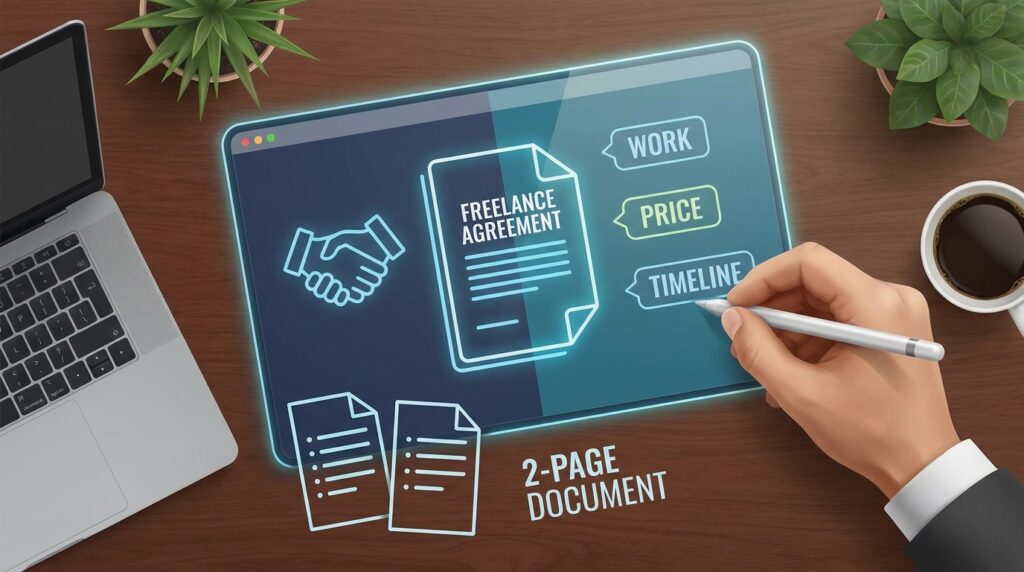
Freelance contracts are written agreements between you and a client that describe the work, the price, the timeline, and how the project can end. They don’t need to be long or formal to be useful. For many small projects, a clear two-page document is enough.
A verbal agreement can be binding in many countries, but proving what was agreed is much harder. A written version gives you a record to refer to when memories differ. It also sets expectations early, which usually makes the working relationship smoother.
Step-by-Step Guide
Work through these seven clauses in order. Each one covers a common source of disputes, and together they form a reliable base for almost any project.
Step 1: Define the Scope of Work

What to do: List every deliverable in clear, measurable terms.
How to do it: Name each item, its quantity, its format, and its due date. Then add a short list of what is not included.
Why it matters: Scope creep, where small extra requests quietly expand the project, is one of the most common reasons freelancers lose money. A clear scope gives you a fair reason to quote extra work separately.
Example: “Five-page responsive website with a contact form and basic on-page SEO. Includes two rounds of revisions. Blog setup, copywriting, and hosting are not included and can be quoted separately.”
Step 2: Set Clear Payment Terms

What to do: State the fee, the currency, the payment schedule, the accepted methods, and what happens when payment is late.
How to do it: Many freelancers ask for a deposit before starting, with the balance due on delivery. For longer projects, split payments into milestones. Always state the currency, such as USD, GBP, EUR, AUD, JPY, or KRW, because bank and exchange fees can reduce what you actually receive.
Why it matters: Payment is the reason you take the project. Vague terms make it easy for invoices to slip down a client’s priority list.
Example: “A 40% deposit is due before work begins. The remaining balance is due within 14 days of invoice. Payments more than 30 days late may incur interest at the rate permitted by applicable law.”
Step 3: Limit Revisions
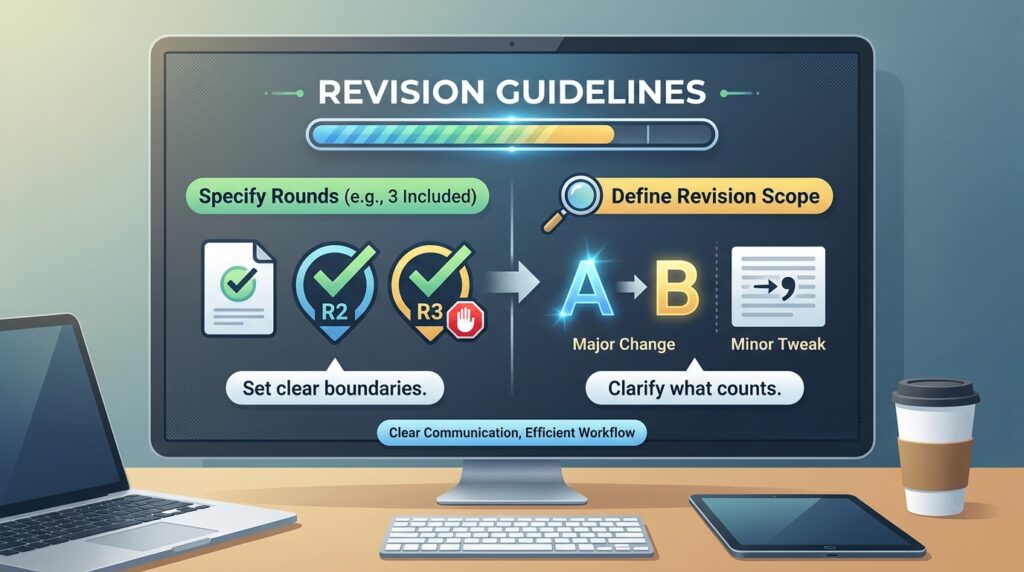
What to do: Specify how many rounds of revisions are included and what counts as a revision.
How to do it: Set a number, such as two rounds, and ask for consolidated feedback within a fixed period, such as five business days. Explain that extra rounds are billed at your standard hourly rate.
Why it matters: Unlimited revisions can turn a profitable project into an unpaid one. A revision limit also encourages clients to give clear feedback instead of sending small changes one at a time.
Example: “Two rounds of consolidated feedback are included. Feedback must be sent within five business days of delivery. Additional revisions are billed at the agreed hourly rate.”
Step 4: Agree on Timelines and Client Responsibilities

What to do: Set start dates, milestone dates, and the materials the client must provide, such as content, logins, product photos, or approvals.
How to do it: Write the deadline as a result of the client’s actions. Something like “delivery is scheduled for 10 working days after all content is received” protects you from delays you cannot control.
Why it matters: Late feedback and missing materials are among the most common causes of missed deadlines. Clients often do not realize that their delays affect your schedule.
Example: “If client materials arrive later than the agreed date, the delivery date moves by the same number of days.”
Step 5: Clarify Intellectual Property and Usage Rights

What to do: Decide when the client owns the work and whether you can display it in your portfolio.
How to do it: Common approaches include transferring ownership after full payment or granting a license for a specific use. Name the rights clearly, including whether the client can resell or modify the work.
Why it matters: Ownership rules vary by country. In the US and UK, for example, creators usually keep copyright unless they assign it in writing, so the transfer needs to be spelled out. Clear terms also protect your ability to show your work to future clients.
Example: “Ownership of final deliverables transfers to the client after full payment is received. The freelancer may display the work in their portfolio unless the client requests otherwise in writing.”
Step 6: Protect Confidentiality

What to do: Define what information must stay private, how long the obligation lasts, and what the exceptions are.
How to do it: Keep the clause short. Specify business information, customer data, login details, and unreleased plans. Set a time limit, commonly one to three years after the project ends.
Why it matters: Many freelancers handle sensitive material such as customer lists, financial data, or product launches. If you work with personal data, check privacy rules such as the EU and UK GDPR, Singapore’s PDPA, Japan’s APPI, South Korea’s PIPA, or Australia’s Privacy Act.
Example: “Both parties will keep shared business information confidential for two years after the project ends, except information that becomes public or must be disclosed by law.”
Step 7: Include Termination and Kill Fee Terms

What to do: Explain how either side can end the project, how much notice is required, and how completed work is paid for.
How to do it: Set a notice period, such as 14 days in writing. Add a kill fee, which is a payment for work lost if the client cancels. Choose a figure that reflects the time you have reserved for the project.
Why it matters: Projects stop for many reasons, including budget changes and internal restructuring. Without this clause, you may end up doing unpaid work or holding time for a project that disappears.
Example: “Either party may end the project with 14 days’ written notice. The client pays for all completed work and a kill fee of 25% of the remaining project fee.”
Common Mistakes to Avoid
Relying on emails alone. Email threads are useful, but they are hard to organize and easy to lose. Put the agreed terms in one document, and reference that document in your emails.
Accepting the client’s template without reading it. Some client contracts contain unlimited revisions, broad ownership clauses, or unusual liability terms. Read every line, and negotiate anything that doesn’t fit your business.
Starting work before signing. Even a short project should not begin until both sides have accepted the terms. A signed or confirmed agreement shows the price and scope you both expect.
Using the same contract for every project. A logo design, a software project, and a monthly content retainer carry different risks. Keep a base template, then adjust the scope, payment, and rights clauses for each job.
Ignoring local rules. Tax treatment, invoicing requirements, and consumer protections vary from the USA to Japan to Singapore. Check the official guidance in your country. In the UK, for example, GOV.UK’s guidance for self-employed people explains many basics of working independently.
Useful Tips
- Keep a clause library. Save your best wording for scope, late fees, and revisions in one document. Reuse and adapt it for each new client.
- Send the contract before the kickoff call. Clients who review terms early are less likely to be surprised later.
- Add a dispute clause. A simple line about first trying to resolve issues through discussion, then mediation, can save significant time and cost.
- Use plain English. Short sentences are easier for international clients to understand, especially when English is not their first language.
- Review your contracts once a year. Laws, payment tools, and your own services change, so update your template as your business grows.
Frequently Asked Questions
Do freelance contracts need to be signed?
Not always. In many countries, an accepted proposal or an email confirmation can be enough for small projects. A signature or digital acceptance makes the agreement easier to prove, so it is a good habit even for short jobs.
What is the most important clause in a freelance agreement?
Most freelancers would point to payment terms and scope of work. Scope defines what you deliver, and payment defines what you receive. If either is unclear, disputes become more likely.
Can I use a free contract template?
Templates can be a useful starting point, but they are not written for your specific situation. Compare the template against the seven clauses in this guide, and have a lawyer review it if the project is high value or involves sensitive data.
How do I handle a client who refuses to sign?
Ask them what concern they have. Often the issue is a single clause, such as revisions or payment timing, that can be adjusted. If a client refuses any written terms for a significant project, that is a useful warning sign.
Final Thoughts on Freelance Contracts

Clear terms make freelance work more predictable and less stressful. Define the scope, set payment terms, limit revisions, agree on timelines, clarify ownership, protect confidentiality, and plan for how the project can end. Start with one project this month. Write your first clause library, send your next client a clear agreement, and build from there. Strong freelance contracts are one of the simplest ways to protect your income and your reputation.
Click this link to read our important and interesting Technology articles as soon as they are published!