
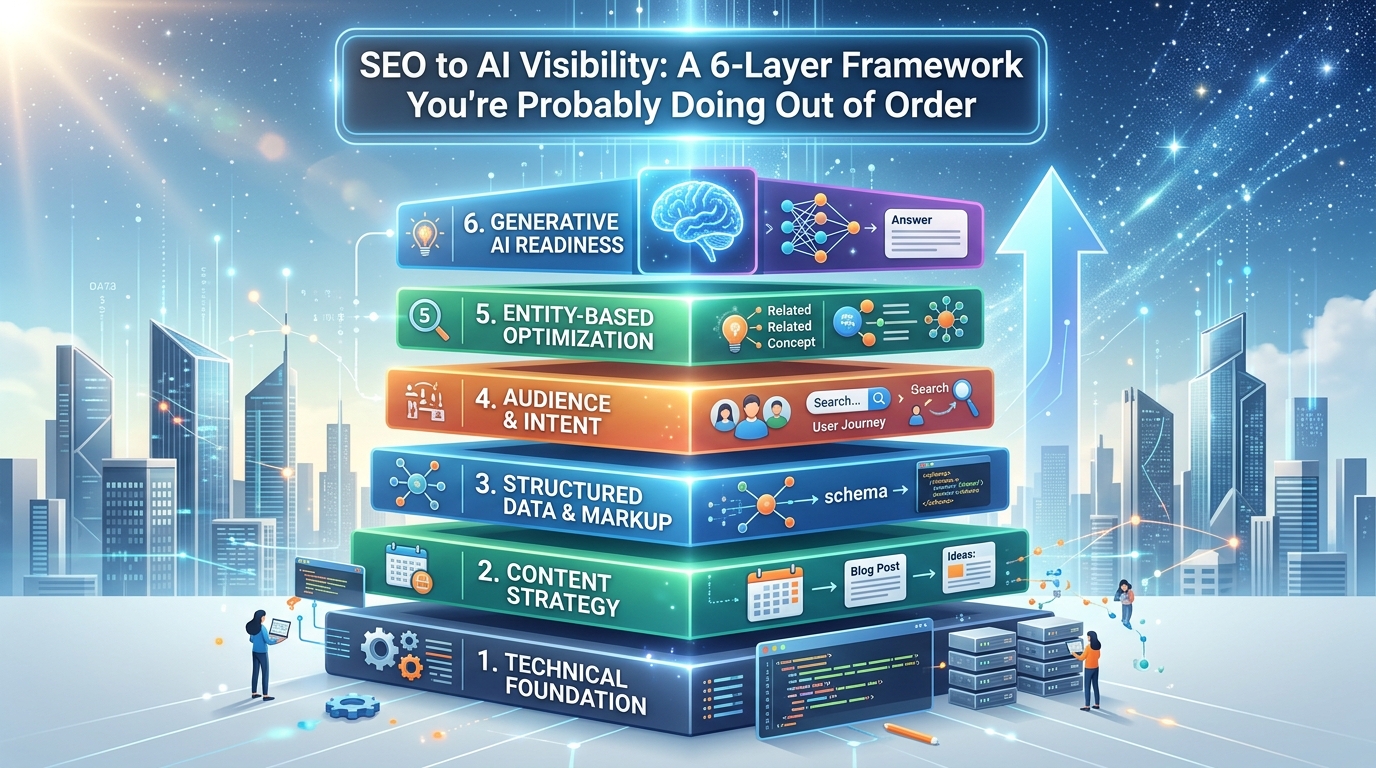
SEO to AI Visibility: A 6-Layer Framework You’re Probably Doing Out of Order
Most advice about ranking in AI search results reads like a grab bag of disconnected tactics — get cited here, optimize that snippet, add this schema markup. What’s usually missing is the order. A genuinely effective SEO and AEO strategy isn’t a checklist you can tackle in any sequence; it’s a stack of layers, and skipping the bottom one makes every layer above it harder to build.
If you’re a freelancer managing client sites, a marketer trying to show up in AI-generated answers, or a small business owner wondering why competitors keep getting cited by tools like ChatGPT or Perplexity, this guide walks through the six layers in the order they actually need to happen — and why jumping straight to “AI visibility tactics” usually wastes the effort.
What Is an SEO and AEO Strategy?
An SEO and AEO strategy combines traditional search engine optimization (getting found and ranked by Google and Bing) with answer engine optimization — the practice of structuring content so AI systems like ChatGPT, Perplexity, and Google’s AI Overviews can understand, trust, and cite it when generating answers.
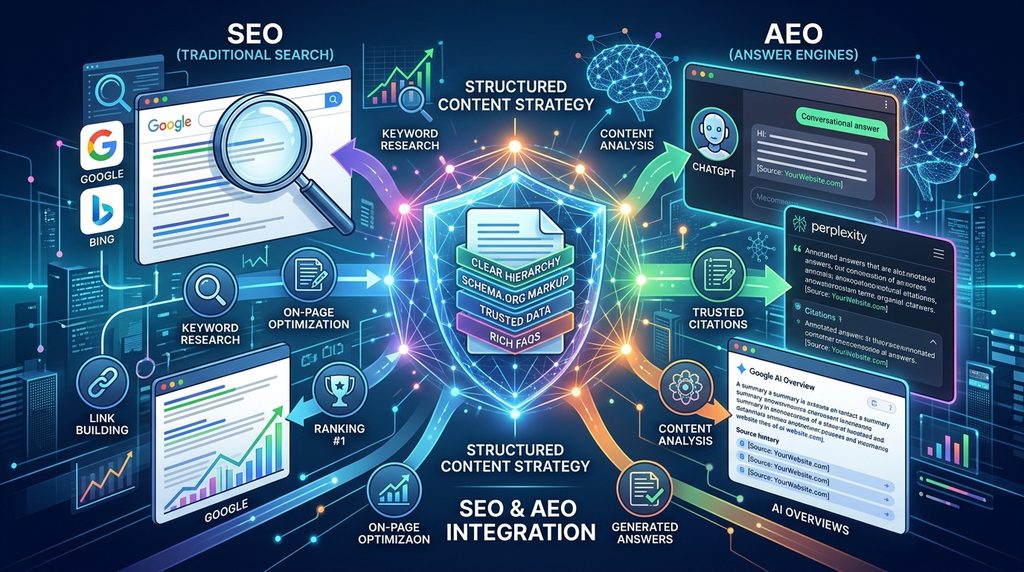
The two disciplines overlap more than they compete. Both reward content that’s technically accessible, clearly structured, and genuinely useful. The difference is the end destination: traditional SEO gets you a ranked link a person clicks; AEO gets you cited or summarized inside an AI-generated answer, sometimes without a click at all. A solid SEO and AEO strategy treats these as sequential layers of the same system rather than two separate projects.
Step-by-Step Guide: Building the 6-Layer Framework
Layer 1: Fix Crawlability First
What to do: Confirm that search engine crawlers and AI systems can actually access and read every important page on your website.
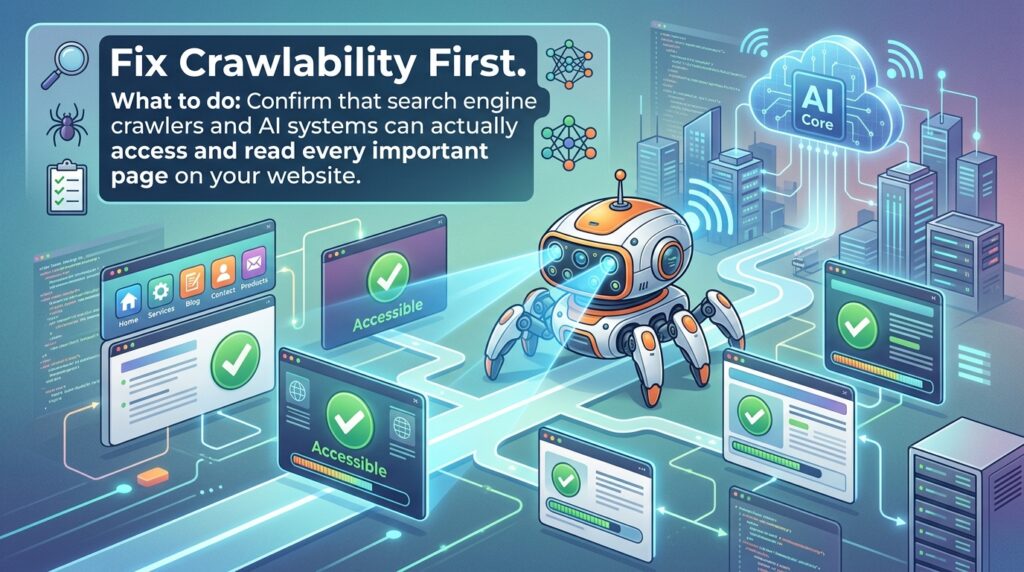
How to do it: Check your robots.txt file for accidental “disallow” rules blocking key pages. Submit your sitemap through Google Search Console and review the “Pages” report for crawl errors. Test a handful of important URLs to confirm they load without login walls, heavy JavaScript rendering delays, or broken redirects. The official Google guide to how Search works explains this process directly from the source.
Why it matters: This is the foundation everything else in an SEO and AEO strategy sits on. If a crawler can’t access a page, no amount of great content, brand consistency, or citation-building on top of it will matter — the page simply doesn’t exist as far as search or AI systems are concerned.
Example: A freelance web developer might discover a client’s pricing page was accidentally blocked in robots.txt during a site redesign months ago — a five-minute fix that had been silently costing visibility the entire time.
Layer 2: Establish Brand Consistency Across Platforms
What to do: Make sure your website, LinkedIn, Reddit presence, and other public profiles describe the same business in the same way.
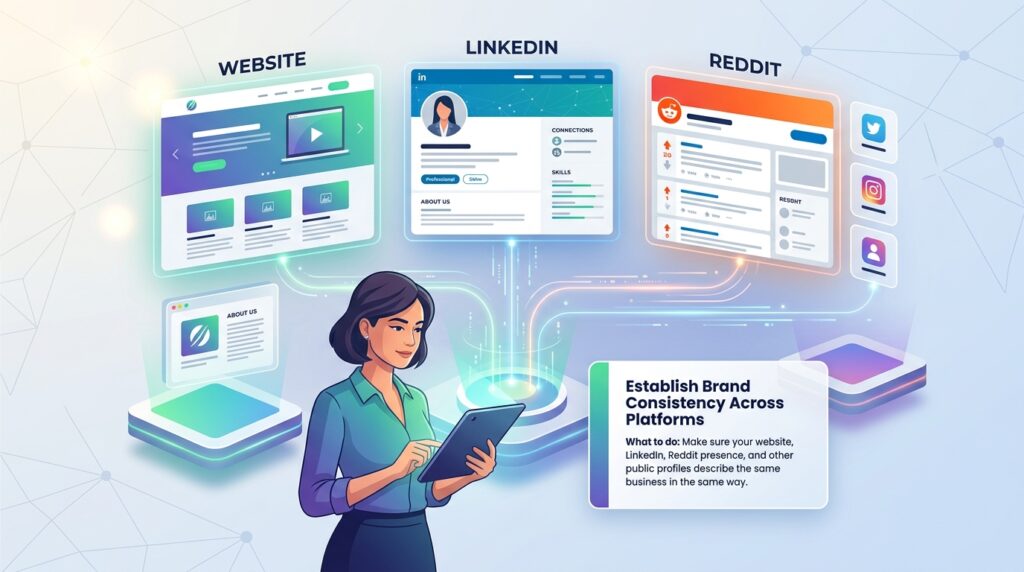
How to do it: Audit your bio, tagline, and core value proposition across every platform where your brand appears. Align the wording — not word-for-word identical, but consistent enough that someone (or an AI system) piecing together information from multiple sources sees one coherent business, not several conflicting descriptions.
Why it matters: AI systems build understanding by cross-referencing multiple sources. Inconsistent positioning across platforms doesn’t just look unprofessional to a human reader — it can make a single business appear as several unrelated entities, diluting how any single one gets recognized or recommended.
Example: An entrepreneur describing themselves as a “content strategist” on LinkedIn, a “copywriter” on their website, and a “marketing consultant” on Twitter/X makes it genuinely harder for any system, human or AI, to build a clear, confident picture of what they actually do.
Layer 3: Structure Content Around Real Questions
What to do: Build content — especially H2 and H3 sections — around the actual questions your audience searches for, answered clearly and directly underneath each heading.
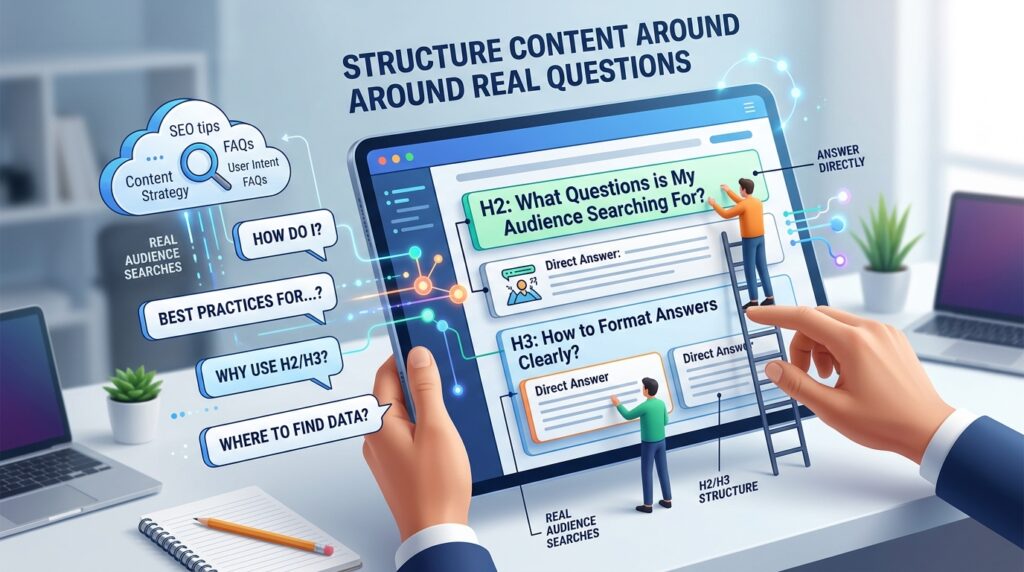
How to do it: Research the specific questions your customers ask (via tools like Google’s “People also ask,” AnswerThePublic, or direct client conversations), then use those questions as your subheadings. Answer each one in the first sentence or two beneath it, before adding supporting detail.
Why it matters: This is where SEO and AEO genuinely converge. A question-led heading with a direct answer underneath is exactly the format both traditional featured snippets and AI-generated answers pull from — structure your content this way once, and it can serve both systems.
Example: Instead of a vague heading like “Our Approach to Onboarding,” a heading phrased as “How Long Does Client Onboarding Take?” followed by a direct, specific answer is far more likely to get pulled into both a Google featured snippet and an AI-generated response to that exact question.
Layer 4: Build Presence Where AI Systems Already Look
What to do: Extend your visibility beyond your own website to the platforms and communities where AI systems commonly source information.
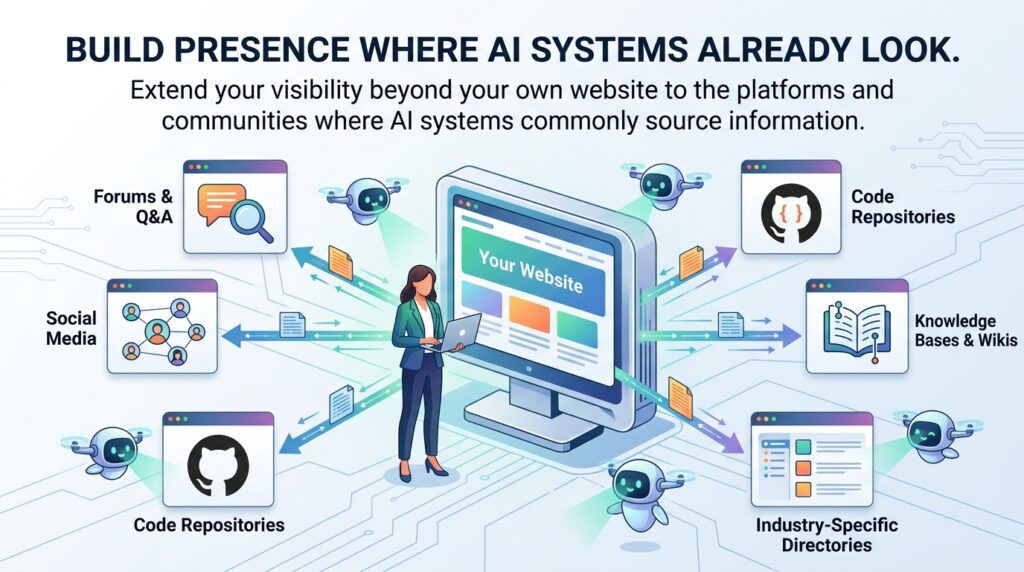
How to do it: Identify where your industry’s conversations actually happen — relevant subreddits, review platforms, industry forums, or comparison sites — and contribute genuinely useful, non-promotional participation there. This isn’t about mass-posting links; it’s about being present and credible in the places these systems already draw from.
Why it matters: Your own website isn’t the only source AI systems reference when building an answer. A brand that’s only discoverable on its own domain has a narrower footprint than one that’s also discussed, reviewed, or referenced across the wider web.
Example: A software freelancer answering genuine technical questions on a relevant subreddit over months, without overt self-promotion, builds a footprint that’s harder to fake and often more trusted by both readers and AI systems than a single polished landing page.
Layer 5: Earn Citations With Real Evidence
What to do: Give AI systems (and human readers) concrete, specific material to reference — case studies, original data, and credible numbers — rather than general claims.

How to do it: Turn vague statements like “we help clients grow” into specific, documented examples: what was done, over what timeframe, and what changed, with numbers where you can verify them. Publish this as dedicated case study content, not buried in a testimonials carousel.
Why it matters: Being mentioned somewhere is different from being the source a system actually pulls from when generating an answer. Specific, verifiable claims are more citable than generic marketing language — this is the layer of an SEO and AEO strategy that genuinely takes sustained effort and can’t be shortcut.
Example: “We improved client search traffic” is easy to skip past. “We took a client’s organic traffic from roughly 2,000 to 5,400 monthly sessions over four months through a technical SEO cleanup” gives a reader — human or AI — something specific to reference and trust.
Layer 6: Convert the Visitor Once They Arrive
What to do: Make sure the traffic and visibility earned through the previous five layers actually converts once someone lands on your page.
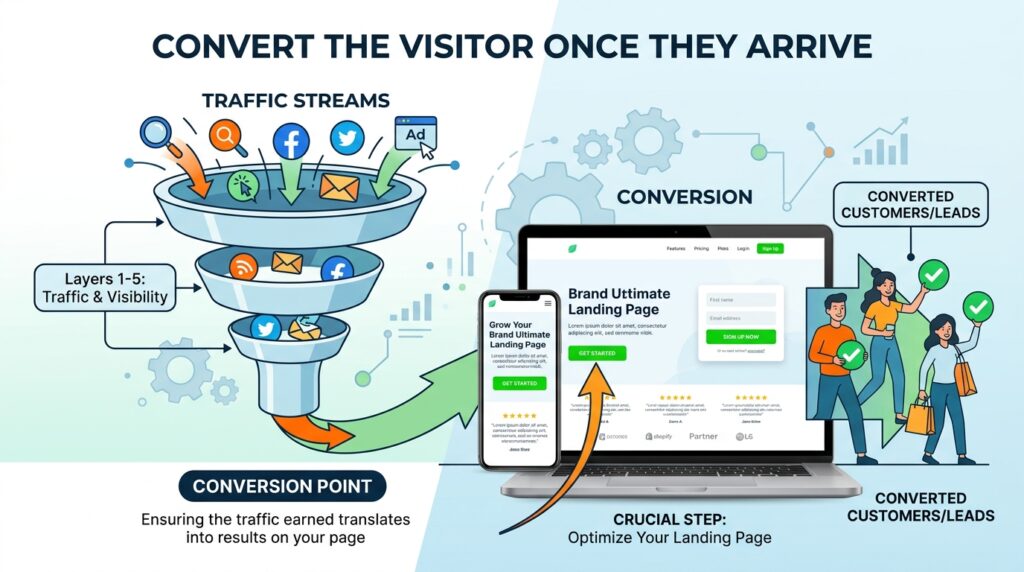
How to do it: If a visitor already knows what they’re looking for (which is increasingly common with AI-referred traffic, since the AI answer has already done some of the explaining), give them the direct answer or next step immediately — don’t bury it under unrelated content they have to scroll past.
Why it matters: Visibility without conversion is wasted effort. All the work in Layers 1 through 5 only pays off if the traffic that finally arrives can actually take the action you want — booking a call, signing up, or making a purchase. This is the layer of an SEO and AEO strategy that turns earned attention into an actual business result.
Example: A landing page for “freelance logo design pricing” that opens with a clear price range and next step converts better than one that opens with three paragraphs of brand philosophy before mentioning pricing at all.
If you’re building this system alongside other content and workflow tools, it’s worth pairing it with our broader SEO and AI search visibility guides to keep your technical setup, content, and conversion tracking connected.
Common Mistakes to Avoid
- Chasing AI citations before fixing crawlability. As Layer 1 covers, none of the later layers matter if crawlers can’t reach your pages in the first place.
- Treating brand consistency as a nice-to-have. Inconsistent positioning across platforms quietly undermines every layer built on top of it.
- Writing generic headings instead of real questions. A vague H2 misses the direct overlap between SEO and AEO that Layer 3 is built on.
- Assuming your website is the only source that matters. As Layer 4 covers, AI systems draw from a wider web of platforms, not just your domain.
- Skipping Layer 6 entirely. Many businesses invest heavily in visibility and forget that traffic without a clear conversion path is visibility wasted.
Useful Tips for Beginners
- Start with a free crawl audit using Google Search Console before spending time or money on anything else in this framework.
- Keep a simple spreadsheet of your bio and positioning language across each platform, so consistency is easy to check and update.
- When researching questions for Layer 3, prioritize the ones your actual past clients have asked you directly — they’re often more specific and useful than generic keyword tool suggestions.
- Document case studies as you complete projects, not months later when the specific numbers are harder to recall accurately.
- Revisit this SEO and AEO strategy periodically — search and AI systems update frequently, and a framework that worked a year ago may need adjusting.
Frequently Asked Questions
1. Do I need to complete all six layers before seeing any results? No, but working roughly in order matters more than completing every layer perfectly before moving on. A site with basic crawlability and decent content structure (Layers 1–3) can see real progress before Layers 4 and 5 are fully built out.
2. Is AEO replacing traditional SEO? Not exactly — the two overlap significantly, and search behavior itself is still evolving. Treat AEO as an extension of a solid SEO foundation rather than a separate discipline to master from scratch.
3. How long does it take to see results from an SEO and AEO strategy? It varies significantly by site size, competition, and starting point, and there’s no fixed timeline that applies to every business. Foundational fixes (Layer 1 and 2) can show measurable improvement within weeks, while citation-building (Layer 5) is typically a longer-term effort measured in months.
4. Can a small freelance business realistically compete for AI visibility against larger competitors? Specific, well-documented expertise (Layer 5) often carries more weight with AI systems than sheer size, since detailed, verifiable content is exactly what these systems look for when choosing what to cite or recommend.
5. What’s the single most common mistake businesses make with this framework? Jumping straight to advanced AI visibility tactics — like chasing citations or community mentions — while basic technical problems on their own website remain unfixed, as covered in the Common Mistakes section above.
Final Thoughts
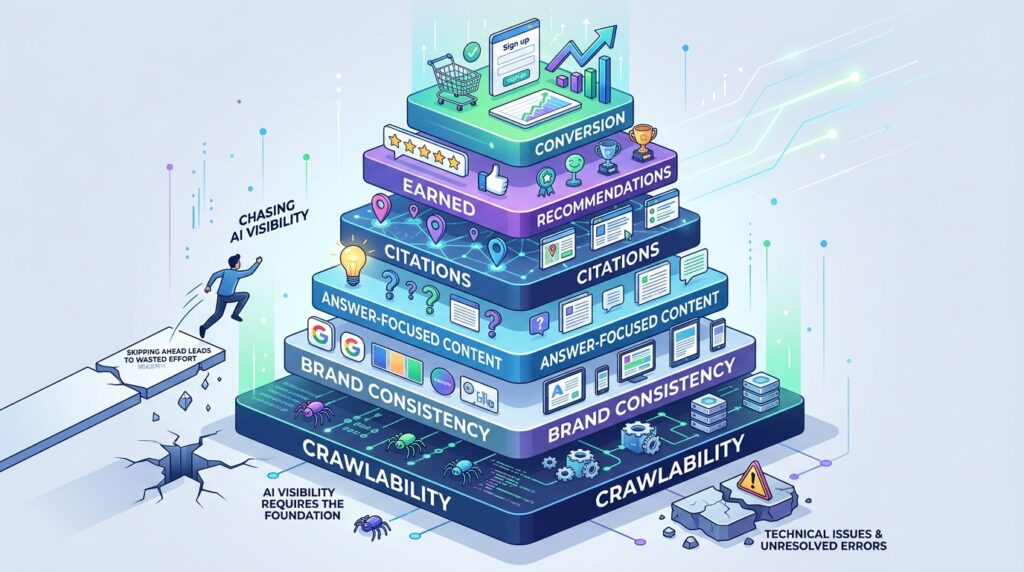
A working SEO and AEO strategy isn’t a collection of isolated tactics — it’s a layered system where each stage depends on the one beneath it: crawlability, brand consistency, answer-focused content, citations, earned recommendations, and finally conversion. Skipping ahead to chase AI visibility while basic technical issues remain unresolved is the most common way this effort gets wasted.
Start by auditing Layer 1 this week — a crawlability check takes less than an hour and tells you exactly where your foundation actually stands before you invest further up the stack.