

How Much Should I Charge as a Beginner Freelancer? A Step-by-Step Guide
How much should I charge as a beginner freelancer
Every freelancer, without exception, has typed “how much should I charge as a beginner freelancer” into a search bar at least once. It’s usually followed by a spiral of contradictory advice — one blog says charge $15/hour to build a portfolio, another says never work below $50/hour, or you’ll devalue the whole industry. Neither answer is actually useful without the reasoning behind it, because the right number depends entirely on your specific situation, not a universal rule.
This guide walks through the actual step-by-step process for figuring out how much I should charge as a beginner freelancer, along with the reasoning behind each step, so you end up with a number you can defend — to a client and to yourself.
Why This Question Is So Hard for Beginners
Pricing feels harder at the start than it ever will again, and there’s a real reason for that: you have no data yet. An experienced freelancer sets rates based on past client budgets, project outcomes, and a track record they can point to. A beginner has none of that, which means the question of how much should I charge as a beginner freelancer isn’t really about confidence — it’s about not having the inputs yet to run the calculation.
There’s also a psychological layer to this that pure math doesn’t solve. Quoting a number to a stranger for the first time triggers a fear of rejection that has nothing to do with whether the number is actually correct. Most beginners lowball their first few quotes not because the research told them to, but because a lower number feels safer to say out loud. Recognizing that instinct for what it is — fear, not data — is part of what makes this process worth following step by step instead of trusting a gut feeling alone.
The good news is those inputs can be built deliberately, step by step, instead of guessed at.

Step 1: Calculate Your Baseline Hourly Rate
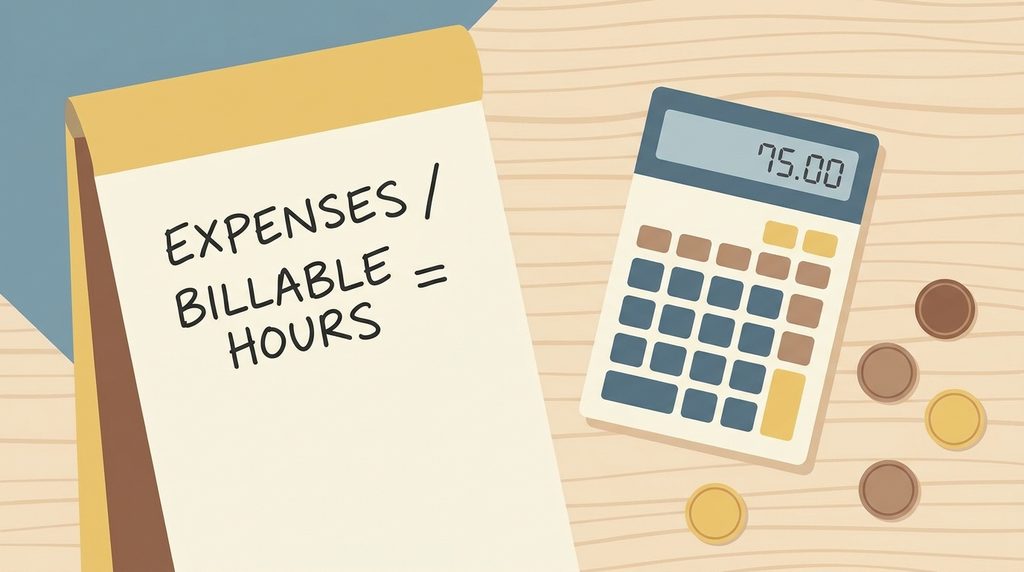
Start with a number, even a rough one, based on your actual financial needs rather than what feels “fair.” Add up your monthly living expenses, then divide by your realistically billable hours per month — not your total working hours, since admin, marketing, and unpaid pitching time eat into that number fast.
Reasoning: Most beginners price based on what they think clients will pay, before ever calculating what they actually need to earn. Starting from your own numbers first prevents you from underpricing out of fear before you’ve even looked at the market.
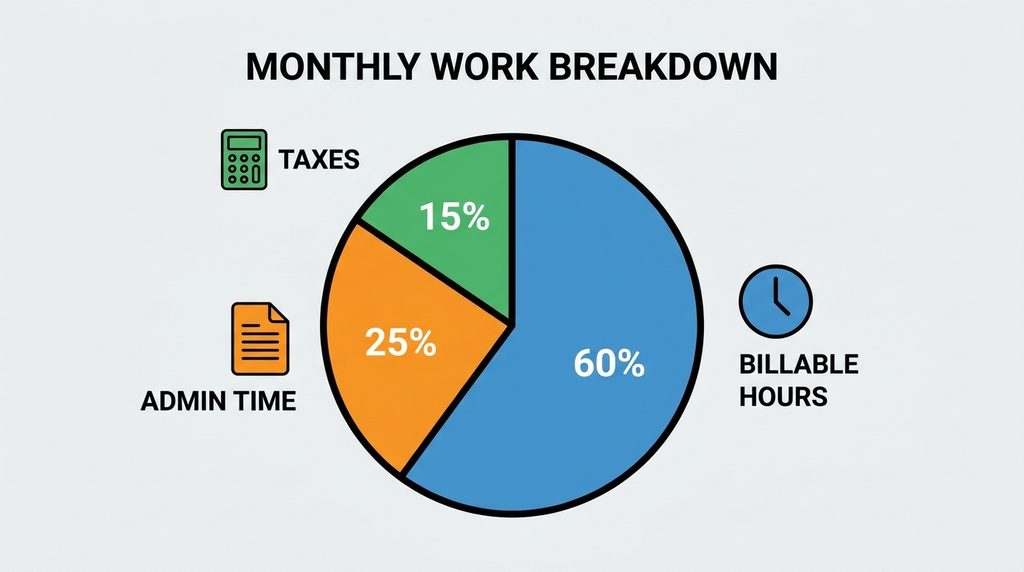
A rough formula: (Monthly expenses + savings goal) ÷ realistic billable hours (often just 60–70% of total working hours) = your baseline hourly rate.
Step 2: Research What Others in Your Niche Actually Charge
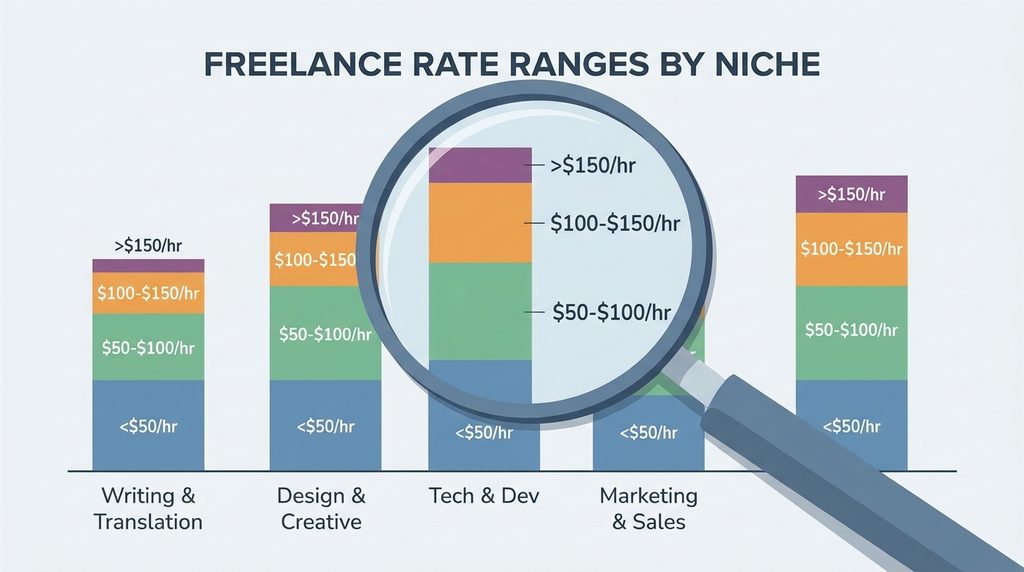
Once you have a baseline, check it against reality. Search freelance platforms, industry surveys, and rate-transparency threads in your specific niche — a beginner graphic designer’s market rate looks nothing like a beginner web developer’s, and rates for the same skill can also swing significantly by region and by whether clients are local or international.
Reasoning: Your baseline tells you what you need; market research tells you what’s realistic to ask for right now. If your baseline is $40/hour but beginners in your niche are landing work at $25–30/hour, you have a decision to make — not because your number is “wrong,” but because it tells you where the market actually sits and how much runway you may need before charging your target rate. Spend at least an hour on this research before quoting your first client; it’s the single highest-leverage step in the entire process.
Step 3: Decide Where You Sit Between Market Low and Market High
Beginners often default to the absolute bottom of a rate range, assuming inexperience means charging the least possible. That’s rarely the right instinct.
Reasoning: Clients hiring beginners aren’t usually looking for the cheapest option — they’re often risk-averse buyers who value communication, reliability, and a portfolio that shows real thinking, even a small one. Pricing yourself at the very bottom of the range signals uncertainty more than it signals affordability, and it attracts the clients most likely to demand the most for the least in return.
A more defensible starting point: aim for the lower-middle of your niche’s beginner range, not the floor. It’s enough to be competitive without training clients to expect rock-bottom pricing from you permanently.
Step 4: Choose Hourly, Project-Based, or Value-Based Pricing
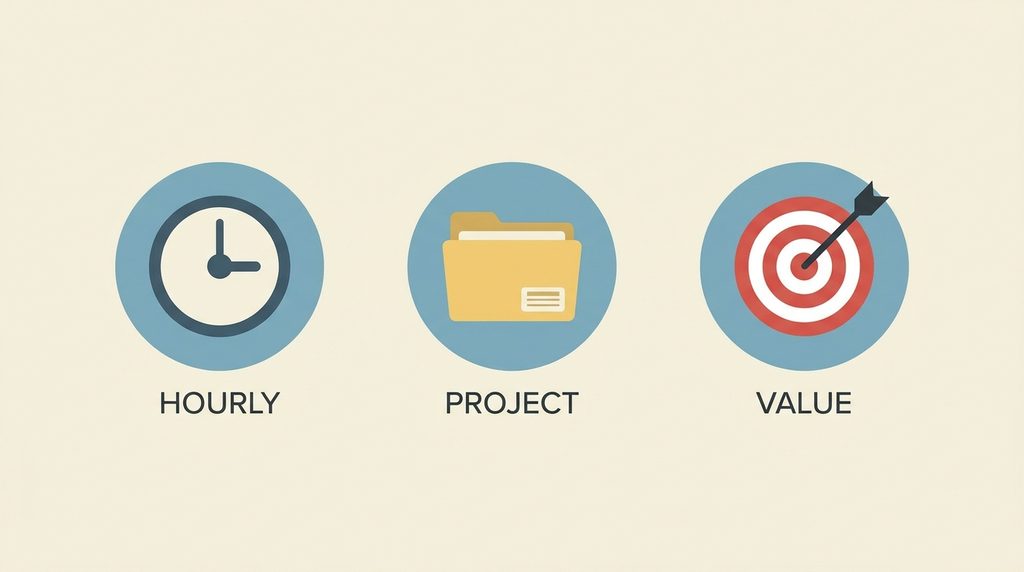
Answering how much I should charge as a beginner freelancer isn’t just a number — it’s also a pricing structure decision.
- Hourly pricing is simplest to start with because it directly ties pay to time spent, which matters when you don’t yet know how long tasks actually take you.
- Project-based pricing rewards efficiency (you get paid the same whether a project takes 8 hours or 12), but requires enough experience to estimate scope accurately — risky for a true beginner.
- Value-based pricing ties your fee to the client’s outcome rather than your time, and is worth exploring only once you have enough track record to make a credible case for the value you deliver.
Reasoning: Most beginner freelancers should start hourly, specifically because underestimating project scope is one of the most common early mistakes, and hourly pricing protects you from working unpaid hours while you’re still calibrating your own speed. This is one of the more overlooked reasons the question of how much should I charge as a beginner freelancer can’t be answered with a single number — the structure you choose changes what “enough” even means.
Step 5: Build In a Buffer for Non-Billable Time and Taxes
Whatever number you land on, add a buffer before quoting it to clients. Freelancers routinely underestimate how much non-billable time — invoicing, client calls, revisions, software costs, and in most countries, self-employment taxes — eats into their actual take-home pay.
Reasoning: A rate that looks fine on paper often isn’t once 20–30% disappears to taxes and another chunk goes to unpaid admin hours. Building that buffer into your rate from day one avoids the common trap of realizing six months in that your “good” rate barely covers your bills.
Step 6: Set a Rate-Increase Plan From the Start
Decide now, before your first client, when and how you’ll raise your rates. A common approach: increase rates every 3–6 months, or after every 3–5 completed projects, whichever comes first — tied to demonstrated results, not just time passing.
Reasoning: Freelancers who don’t plan rate increases in advance tend to keep their original “beginner” rate far longer than necessary, simply because raising prices feels awkward without a built-in trigger to prompt it. Deciding the plan upfront removes the emotional friction later.
Common Mistakes Beginners Make When Setting Rates
- Charging based on what feels comfortable to ask for, not what the work is worth. Comfort is a starting point, not a pricing strategy — it should shift as your evidence grows.
- Never revisiting the rate. A rate set in month one shouldn’t still be the rate in month twelve if your skills and results have genuinely improved.
- Undercutting to “just get experience.” A few strategically discounted early projects can be reasonable, but a permanently rock-bottom rate trains the market — and yourself — to expect it indefinitely.
- Ignoring niche-specific data. General freelance advice (“charge $50/hour minimum”) ignores how wildly rates vary by skill, industry, and region — always check your specific niche before setting a number.
- Answering the question once and never again. How much should I charge as a beginner freelancer is a question worth revisiting every few months, not something you settle permanently in your first week of freelancing.
Frequently Asked Questions
How much should I charge as a beginner freelancer with zero experience? Start by calculating your baseline rate from your actual expenses, then check it against niche-specific market data — most true beginners land in the lower-middle of their niche’s starting range, not the absolute floor.
Should I ever work for free to build a portfolio? Occasionally, and strategically — a small number of case-study projects can be worth it, but “free” should have a clear end point and purpose, not become a default habit. Even then, the underlying question of how much should I charge as a beginner freelancer still applies to everything after that initial handful of portfolio pieces.
When should I raise my rates for the first time? Most freelancers see solid results raising rates after their first 3–5 completed projects, or every 3–6 months, whichever happens first.
Is hourly or project-based pricing better for beginners? Hourly is generally safer starting out, since it protects you from underestimating how long a project will actually take.
Final Thoughts
There’s no single universal number that answers how much should I charge as a beginner freelancer — but there is a reliable process for finding your number: calculate your real financial baseline, check it against your niche’s market data, choose a pricing structure that matches your experience level, build in a buffer for taxes and non-billable time, and set a plan for raising rates before you need one. Follow those steps in order, and the number you land on will be one you can actually defend, to a client and to yourself.
For a related look at organizing the client and invoice side of freelance work once you’ve settled on pricing, see our guide to Notion templates for freelancers.
For current market-rate data across different freelance niches, Payoneer’s annual freelancer income report is a useful benchmark to check your numbers against before quoting your first clients.