
AI Reverse Engineering: A Practical Guide
Software often arrives as a closed box. You can see what it does, but not how it works inside. For decades, opening that box was a specialist job, done by hand with tools like Ghidra and IDA Pro. Now a new generation of open-source projects lets AI agents handle much of the exploratory work. The clearest example this month is REA, short for “Reverse Engineer Anything,” which climbed GitHub Trending in October 2026. This guide explains what AI reverse engineering is, how it works, and what you can realistically do with it, whether you’re a developer, a security learner, or a freelancer looking to add a useful skill.
What Is AI Reverse Engineering?

Traditional reverse engineering means starting from a finished program, often just a compiled binary, and working backward to understand how it behaves. Analysts use disassemblers to turn machine code into readable assembly, debuggers to pause execution, and network inspectors to watch what a program sends and receives.
AI reverse engineering adds a reasoning layer on top. A language model acts as an agent: it calls tools, reads their output, forms a hypothesis, tests it, and repeats. Instead of clicking through every function yourself, you let the agent propose where to look next, then check its reasoning.
REA is a good illustration. Published by developer morluto on GitHub, it’s built so AI agents can inspect and analyze software through structured tools. Press coverage reported that the repository gained tens of thousands of stars within days, which shows how much developers want agent-assisted analysis.
One caution: the name is shared by smaller projects. A separate, much smaller repository with a similar name focuses on Ghidra workflows. Before you trust any project, check the author, the license, the recent activity, and the README.
Why It Matters for Working Professionals
AI Reverse Engineering

Software is everywhere, and so is the need to understand it. Security teams check whether an app leaks data. Developers maintain legacy systems whose original documentation disappeared years ago. Integration specialists need to know how a closed tool talks to other systems. Learners use these methods to build hands-on skills that many security and software maintenance roles look for.
For freelancers and remote workers, the main advantage is speed. Work that once took days of manual digging can often be scoped in hours, which makes focused offerings possible, such as compatibility reports, security checklists, or documentation projects. Speed isn’t the same as accuracy, though, which is why the verification steps below matter so much.
If you’re building technical skills alongside your current work, you’ll find more practical guides in our digital skills guides.
Step-by-Step Guide to Getting Started
Follow these steps in order whenever you start an AI reverse engineering project. Skipping the first one is the fastest way to get into trouble.
Step 1: Confirm You Have Permission
AI Reverse Engineering

What to do: Analyze only software you own, have written, or are explicitly allowed to examine, such as in a licensed security test or an interoperability project.
How to do it: Read the software’s license and terms of service. Check whether the vendor restricts reverse engineering. For client work, get written authorization that defines the scope.
Why it matters: Legal rules differ by country, and even within a country, exemptions come with conditions. The U.S. Copyright Office guidance on Section 1201 explains how these rules have been applied. Read the official material, and consult a qualified lawyer when your situation is unclear.
Example: A freelancer hired by a company to test its own mobile app has a clear scope. Testing a competitor’s paid product without permission does not.
Step 2: Build an Isolated Lab
AI Reverse Engineering

What to do: Create a separate environment for analysis.
How to do it: Use a virtual machine with snapshots. Don’t log into personal accounts inside it, and limit its outbound network access. Keep samples in a dedicated folder.
Why it matters: Unknown software can be harmful, and an AI agent may run commands you didn’t expect. Isolation protects your main machine and your data.
Example: Take a snapshot of a clean virtual machine before you open anything. If something goes wrong, you can roll back in minutes.
Step 3: Learn the Core Tools
AI Reverse Engineering
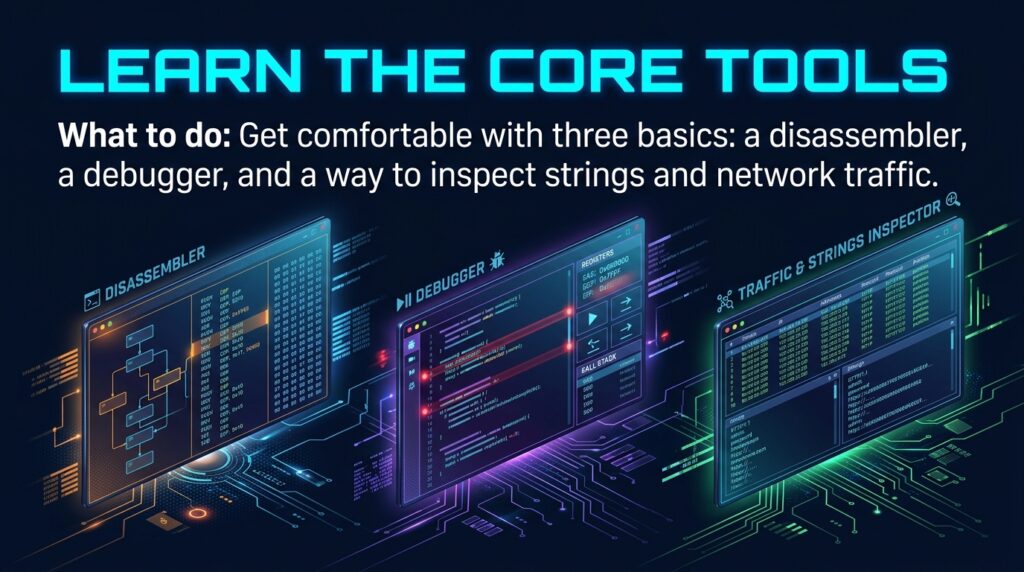
What to do: Get comfortable with three basics: a disassembler, a debugger, and a way to inspect strings and network traffic.
How to do it: Ghidra is free and widely used for disassembly. Use a debugger suited to your platform, such as x64dbg on Windows or GDB on Linux. A traffic proxy lets you see what an application sends over the network.
Why it matters: An AI agent is only as good as the tools it can use. If you don’t understand what those tools output, you can’t judge whether the agent’s conclusions hold up.
Example: Spend an afternoon opening a simple program in Ghidra and tracing one function from start to finish before you add AI to the process.
Step 4: Set a Narrow, Specific Goal
AI Reverse Engineering

What to do: Give the agent one question at a time.
How to do it: Instead of “figure out this program,” try: “List the exported functions, identify the entry point, and explain what the main function does with user input.”
Why it matters: Narrow goals reduce wandering and make mistakes easier to spot.
Example: “Find where the program reads its configuration file and list the fields it expects.”
Step 5: Require Evidence for Every Claim
AI Reverse Engineering

What to do: Ask the agent to cite the tool output behind each conclusion.
How to do it: Add a rule to your prompt: “For every claim, name the tool and the exact address, string, or output that supports it. Label guesses clearly.”
Why it matters: Language models can sound confident while being wrong. Evidence makes errors visible.
Example: A claim like “this function validates a license key” should come with the specific comparison or string reference it relies on.
Step 6: Verify Each Hypothesis Yourself
AI Reverse Engineering

What to do: Test important findings independently.
How to do it: Run the software with controlled inputs, watch the debugger, or compare behavior across several test cases.
Why it matters: Verification is where analysis becomes trustworthy. An agent’s theory is a lead, not a result.
Example: If the agent says a setting is stored in a particular file, change the setting yourself and check that file.
Step 7: Document Everything
AI Reverse Engineering
What to do: Keep structured notes as you go.
How to do it: Use a simple template for each finding: the question, the tool used, the evidence, the conclusion, your confidence level, and open questions.
Why it matters: Good notes make your work reproducible, help clients follow your reasoning, and protect you if someone questions your method.
Example: A one-page report listing twelve findings, each with a log excerpt or screenshot.
Step 8: Turn Findings Into a Useful Outcome
AI Reverse Engineering
What to do: Decide what your analysis is for.
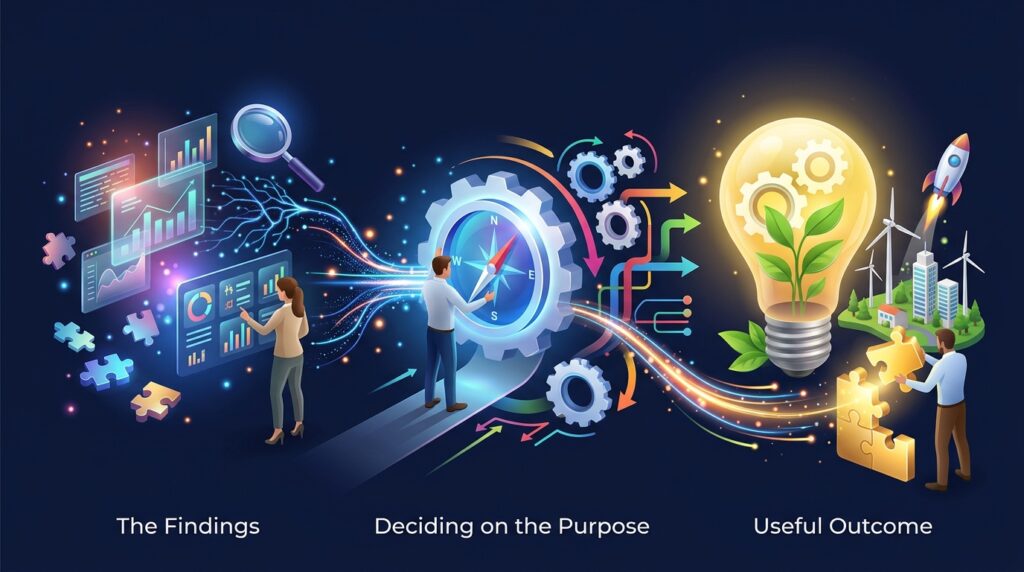
How to do it: Common outputs include a compatibility guide, a security checklist, documentation for an undocumented file format, or a tutorial that teaches others the method.
Why it matters: Findings create value only when someone can act on them.
Example: A consultant might turn the analysis of a legacy data format into a migration guide for a client’s engineering team.
Common Mistakes to Avoid
Most problems in AI reverse engineering come from a few predictable habits.
- Trusting the first answer. Verify important claims with a second method, such as a debugger run or a controlled test.
- Starting without permission. Write down the scope and authorization before opening any file.
- Running unknown files on your main computer. Use an isolated virtual machine with snapshots.
- Writing vague, sweeping prompts. Break the task into one question per run.
- Ignoring data policies. Tool outputs sent to a model provider may be handled under that provider’s terms. Avoid sending confidential or client data unless your agreement allows it.
- Publishing sensitive details too early. If you find a security weakness, report it through the vendor’s disclosure process first.
Useful Tips for Beginners
- Practice on programs you built yourself. Knowing the expected behavior makes errors much easier to spot.
- Keep a glossary of terms like “entry point,” “import table,” and “calling convention” as you encounter them.
- Use legal practice challenges designed for learning, such as beginner exercises built specifically for reverse engineering.
- Track how long each task takes. This gives you realistic estimates for future work, rather than guesses.
- Check a repository’s recent commits, open issues, and license before installing it.
- Practice in short, regular sessions. Thirty minutes a few times a week builds skill better than occasional marathons.
Frequently Asked Questions
What is AI reverse engineering used for?
It helps analysts understand how software works when source code isn’t available. Common uses include security testing, legacy system maintenance, and interoperability work.
Is AI reverse engineering legal?
It depends on the software, your location, and whether you have authorization. Analyzing software you own or have permission to examine is the safest starting point. This is general information, not legal advice.
Do I need to be a programmer to start?
Basic programming knowledge helps a lot. Understanding how programs store data, call functions, and use memory makes the agent’s output much easier to judge.
Can an AI agent replace an experienced analyst?
No. It speeds up exploration and drafting, but human judgment is still needed to verify findings, understand context, and decide what matters.
Final Thoughts

AI reverse engineering is moving from a niche specialty toward everyday engineering practice. Projects like REA show how agents can take on the repetitive parts of analysis, while human judgment remains essential for accuracy, legality, and safety. Start small: confirm your permission, build a safe lab, and practice on software you understand. Then document what you learn and share it in a way that helps others. Which step will you try first?