
Land Your First Client Fast: A Simple LinkedIn and AI Plan
You don’t need a huge audience or a polished portfolio site to find your first paying client. Many freelancers start with a clear offer, a well-written LinkedIn profile, and a short list of people who might need what they do. AI tools can help you draft, organize, and research faster, but the real work is still conversation, clarity, and follow-through.
This guide gives you a 14-day structure for reaching out to potential clients on LinkedIn, with AI supporting the writing and planning. It is not a promise of a client by any specific date. Results depend on your skills, your market, and how consistently you follow up. For each step, you’ll see what to do, how to do it, why it matters, and an example you can adapt.
What Does It Mean to Land Your First Client?
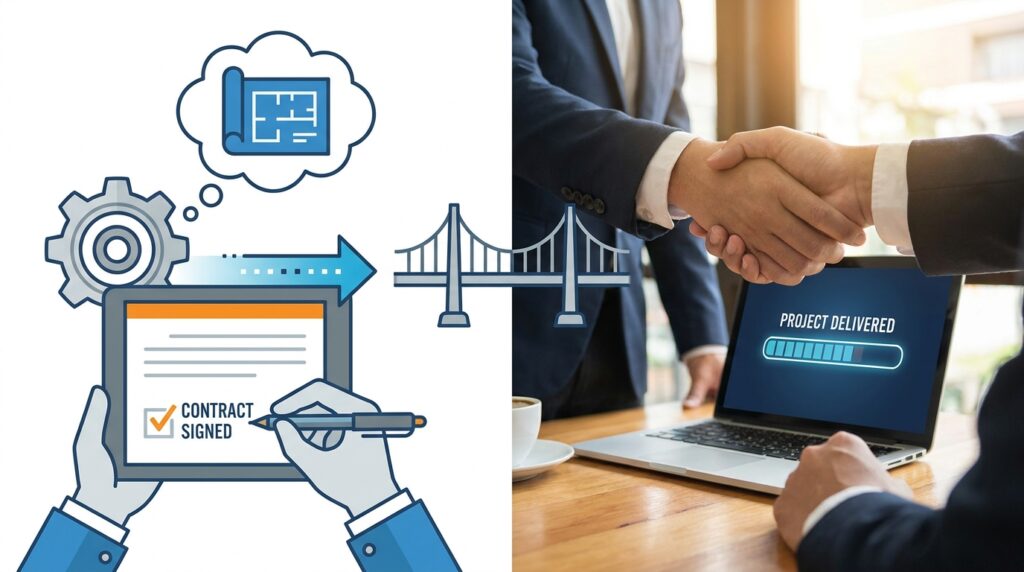
Landing your first client means signing a paid agreement with someone who is not a friend, family member, or former employer, and delivering work for them. For many freelancers, it is the moment the business moves from an idea to a real service.
LinkedIn is useful for this because it is a professional network where people already expect business conversations. Your profile acts as a short sales page, your posts show how you think, and direct messages let you start a conversation with the right person.
AI tools fit into this process as assistants. They can help you rewrite a headline, brainstorm a list of target industries, or tighten a message that sounds too long. They cannot replace your judgment about who you can help, and they should not be used to send mass messages that pretend to be personal.
Step-by-Step Guide
Work through these steps across roughly two weeks. Some steps take an afternoon, while others need a few days of consistent effort. The schedule is a framework, not a rule.
Step 1: Set a Clear Offer

What to do: Write one sentence describing the service you offer, the type of client you serve, and the result they can expect.
How to do it: Use this format: “I help [type of client] [solve specific problem] by [service].” For example: “I help small restaurants improve their online menus with clean, mobile-friendly design.” Then ask an AI tool to suggest three wording alternatives, and choose the one that sounds most like you.
Why it matters: A specific offer is easier to remember and easier to refer. Vague descriptions such as “I do digital marketing” make it hard for a potential client to see how you can help them.
Example: A bookkeeper who wrote “I help freelancers organize quarterly tax records” gets more relevant conversations than one who wrote “I offer financial services.”
Step 2: Refresh Your LinkedIn Profile
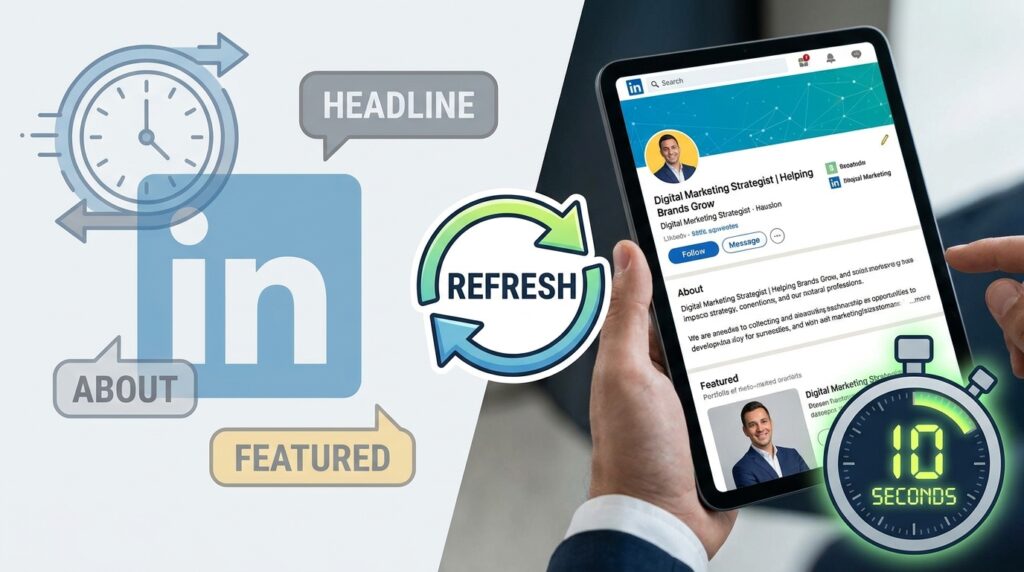
What to do: Update your headline, About section, and featured work so a visitor understands your offer within ten seconds.
How to do it: Place your offer in the headline, then use the About section to explain who you help, what you deliver, and one or two results you can describe honestly. Add samples, screenshots, or links under Featured. Ask a trusted contact to read the profile and tell you what they think you do.
Why it matters: Potential clients often check your profile before replying. A confusing profile can make a warm conversation go cold.
Example: A freelance copywriter changes her headline from “Writer” to “Website copywriter for SaaS startups,” and adds two case studies with the client’s permission.
Step 3: Build a Target List

What to do: Identify 30 to 50 people or companies who match your offer.
How to do it: Use LinkedIn’s search filters for industry, location, and job title. Save the names in a simple spreadsheet with columns for name, company, role, reason for contact, and status. Include a note about why each person might need your help, based on something you can see on their profile or company website.
Why it matters: A focused list is more effective than messaging everyone. Writing a reason for each contact keeps your outreach relevant and respectful.
Example: A freelance web designer searches for “operations manager” at local dental clinics in his region and notes that three of them have outdated websites.
Step 4: Use AI to Draft, Not to Impersonate

What to do: Use an AI tool to draft outreach messages, then personalize every one before sending.
How to do it: Give the tool your offer, the prospect’s role, one specific observation about their business, and a short call to action. Ask for a message under 80 words. Read the draft aloud, replace any generic phrases, and add a detail only you would notice. Never send a message you haven’t read.
Why it matters: Clients can usually tell when a message is generic or automated. Honest personalization builds trust, and it protects your reputation on a platform where people talk.
Example: Instead of “I love your company and would love to help,” a message might read: “I noticed your clinic’s booking page takes three steps to reach the form. I make these flows simpler, and I’d be glad to share a quick idea if it’s helpful.”
Step 5: Post Useful Content Three Times a Week

What to do: Share short, practical posts that show how you think about your work.
How to do it: Write about one lesson, mistake, or small win per post. Keep it between 100 and 200 words, use a plain opening sentence, and end with a question. Use AI to brainstorm ideas, but rewrite the drafts in your own voice and include real examples from your experience.
Why it matters: Prospects who see your posts often feel they already know you before the first message. Consistent posting also helps your profile appear in search and feeds.
Example: A freelance project manager posts a short breakdown of how she handles scope changes. A reader who had been considering hiring help sends her a message the next day.
Step 6: Send Your First Ten Messages

What to do: Start a small batch of conversations with prospects on your list.
How to do it: Send ten personalized connection requests or messages each day for three days, not fifty in one sitting. Keep the first message focused on the prospect, not on your pitch. Ask one open question, such as whether they handle a specific task themselves or have someone who does it for them.
Why it matters: Small batches keep your outreach manageable and allow you to improve your message between rounds. Opening with a question invites a reply instead of a sales pitch.
Example: A freelance editor asks an author whether they plan to self-publish or pursue a traditional deal, then offers a short sample edit only if the author is interested.
Step 7: Follow Up Politely
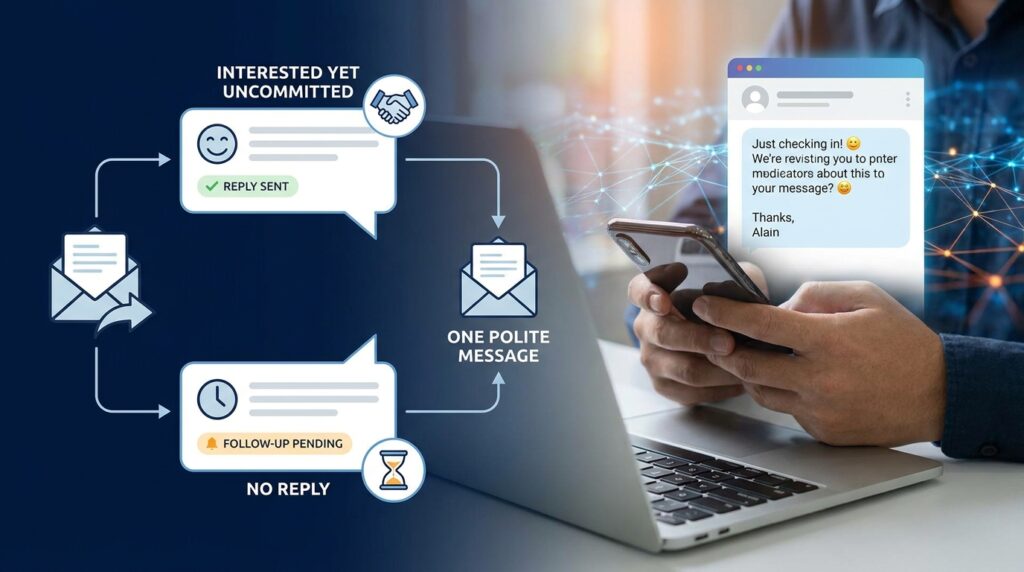
What to do: Send one follow-up message to people who replied with interest but did not commit, and to those who did not reply after a few days.
How to do it: Wait three to five business days before the first follow-up. Mention the earlier conversation, share one useful resource, and ask whether a short call would help. If there is still no reply, send one final message a week later and then stop.
Why it matters: Many clients need reminders because they are busy. A calm, limited follow-up respects their time and keeps the conversation open.
Example: “Hi Sam, I wanted to share the checklist I mentioned for smoother website launches. Would a 15-minute call next week be useful?”
Step 8: Book a Discovery Call

What to do: Schedule a short conversation to learn about the prospect’s needs before proposing anything.
How to do it: Prepare three questions: what they are trying to achieve, what has been tried so far, and what success would look like. Listen more than you talk. Take notes, and summarize the problem back to them before suggesting a next step.
Why it matters: A discovery call shows you understand the work and helps you decide whether the project is a good fit for both sides.
Example: A freelance graphic designer learns that a client needs a new logo for a trade show in six weeks. She explains her timeline honestly and proposes a fixed-scope package.
Step 9: Send a Clear Proposal

What to do: Put the agreed scope, timeline, price, and payment terms in writing.
How to do it: Use a simple structure: project summary, deliverables, timeline, fee, payment schedule, and a sign-off section. Ask an AI tool to help you format the document, but review every number yourself. Send it as a PDF and ask for written acceptance.
Why it matters: Clear written terms prevent misunderstandings about what you will deliver and when you will be paid. They also make your professionalism visible to the client.
Example: A consultant sends a one-page proposal with a 50 percent deposit before work begins and a note that additional revisions will be quoted separately.
Step 10: Confirm the Agreement and Start Strong
What to do: Confirm the deal in writing, collect the deposit, and begin the work with a clear first deliverable.
How to do it: Reply with a short confirmation email that restates the scope and next steps. Set up a shared folder or project board. Share a kickoff timeline and ask the client to confirm it.
Why it matters: A strong start builds trust and makes the first project easier to deliver well. A well-run first client also becomes a source of referrals and testimonials.
Example: A remote virtual assistant sends a kickoff checklist that lists access details, response times, and the first two tasks, then completes the first task ahead of schedule.
Common Mistakes to Avoid
Sending generic pitches. Messages that could go to anyone rarely get replies. Solution: Include one specific observation about each prospect’s business and keep the first message short.
Overloading your profile. Too many skills and services can confuse visitors. Solution: Lead with one clear offer, then mention related skills below it.
Letting AI write everything. Polished but empty messages can feel fake. Solution: Use AI for drafts and outlines, then rewrite each message in your own voice before sending.
Quitting after silence. Many prospects are busy rather than uninterested. Solution: Use a light follow-up schedule and stop after two or three attempts.
Working without a written agreement. Verbal deals lead to scope disputes and late payments. Solution: Send a simple written proposal before any work begins.
Underpricing to win the first project. Very low prices can attract difficult clients and leave you overworked. Solution: Set a fair price based on your time and experience, and explain your value clearly.
Useful Tips
- Keep your outreach list up to date. Note every reply and next step so no conversation falls through the cracks.
- Ask for referrals. Tell your first clients who you’d like to work with next and ask whether they know anyone who might need help.
- Use a simple weekly review. Each Friday, check how many messages you sent, how many replied, and what you would change.
- Protect your personal information. Don’t share sensitive client data with AI tools, and remove identifying details from examples.
- Watch for scams. Be cautious about anyone who asks you to pay a fee to start work or pushes you off LinkedIn quickly.
- Track your time honestly. Knowing how long your first project takes helps you price the next one accurately.
If you’re exploring more practical ways to build digital income and professional visibility, the practical digital skills guides at Digital Task Compass cover related topics in more depth.
Frequently Asked Questions
How long does it take to find a first client?
There is no reliable fixed timeline. The 14-day plan gives you a structured way to start conversations and learn from the responses, but some freelancers find a client sooner and others take longer. Consistency matters more than speed.
Do I need a big LinkedIn following to get clients?
No. A focused network of relevant contacts often matters more than follower count. Clear messages to the right people usually work better than broad posting.
Is it safe to use AI tools for client outreach?
It can be, as long as you protect private information, review every draft, and avoid misleading claims. Never paste confidential client details into AI tools without checking the provider’s data policy.
What should I do if a prospect asks for free work first?
You can offer a short, clearly limited sample or a brief audit, but avoid unlimited free work. Set a clear scope and a time limit so you protect your time and show what working together would look like.
Can this plan guarantee income?
No. It is a structure for starting conversations and building a client pipeline. Income depends on your skills, market demand, pricing, and follow-through, and no method can guarantee clients or earnings.
Final Thoughts

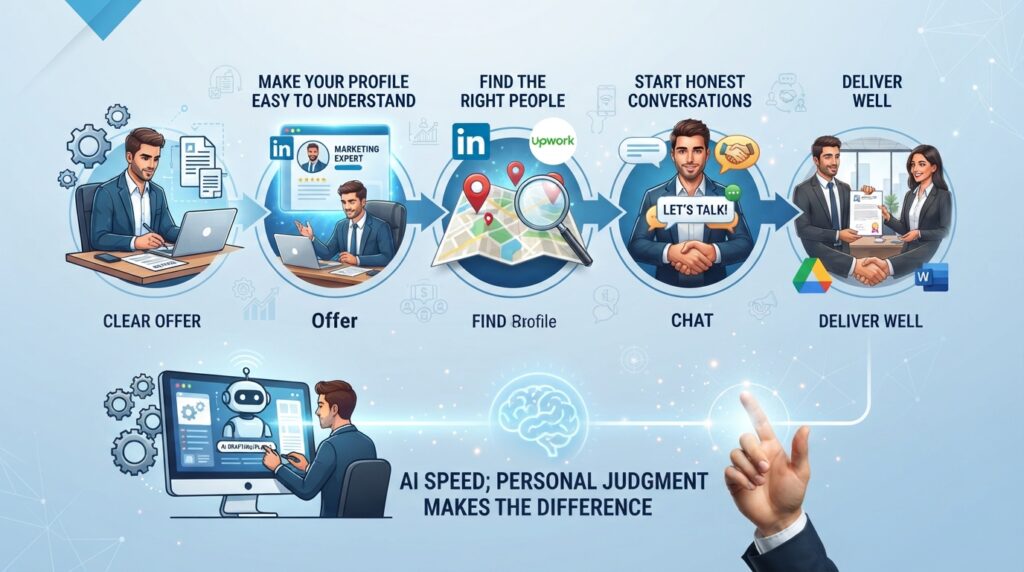
Landing your first client usually comes from a simple sequence: define a clear offer, make your profile easy to understand, find the right people, start honest conversations, and deliver well. AI can speed up the drafting and planning, but your judgment and personal touch still make the difference.
Start today by writing your one-sentence offer and listing ten people who might need it. Then send three personalized messages tomorrow. That small, steady habit is the most practical first step toward landing your first client.
Click this link to read our important and interesting Technology articles as soon as they are published!