

Data Structures and Algorithms: A Complete Developer Guide
Every app you use depends on decisions about how to store information and how to process it. Search results, maps, payment systems, and social feeds all rely on those decisions. The field that studies them is called data structures and algorithms, usually shortened to DSA. For developers, it’s the foundation for software that stays fast as it grows. For freelancers, job seekers, and digital professionals, it’s a skill that shows up in technical interviews, code reviews, and real product work. This guide explains what DSA is, why it matters, and how to build it into your future development plans.
What Are Data Structures and Algorithms?
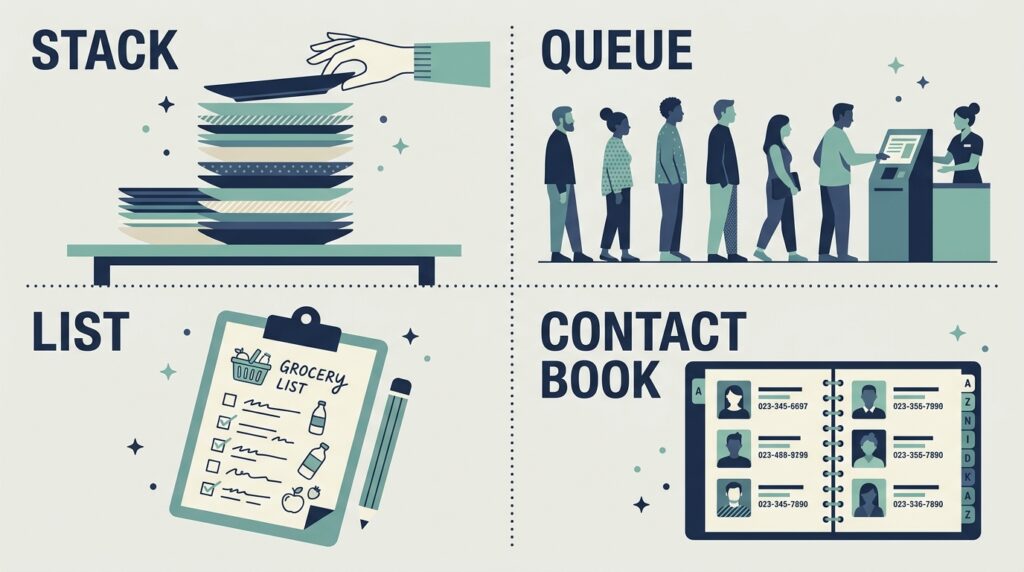
A data structure is a way of organizing data so it can be used efficiently. Everyday examples include a shopping list (like an array), a stack of plates (a stack), a line at a bank counter (a queue), and a phone’s contact list with fast lookup (a hash table).
An algorithm is a clear sequence of steps that solves a problem, such as sorting a list, finding a word in a document, or calculating the shortest route between two points.
Neither works well alone. The same data stored in different ways can make a search take a second or an hour. Together, data structures and algorithms let you reason about speed and memory before you write a single line of code.
Developers measure this with Big-O notation, which describes how the amount of work grows as the input grows. Suppose you have a list of one million customer names. Checking each name one at a time may take a million steps in the worst case. A hash table can often find a name in a near-constant number of steps. That difference is the whole point of DSA.
Advantages and Real-World Uses of DSA
DSA is more than interview preparation. Its benefits show up in everyday work:
- Faster software: Choosing the right structure can turn a slow feature into a responsive one.
- Lower resource use: Efficient code uses less memory and processing power, which matters for mobile apps and cloud bills.
- Better problem solving: DSA trains you to break a messy problem into smaller, testable parts.
- Clearer communication: Saying “this uses a hash map for constant-time lookups” helps teammates and clients understand your decisions.
- Easier debugging: When you understand how data is organized, you can predict where things break.
- Stronger technical interviews: Many companies assess DSA concepts during hiring, though requirements vary by employer and role.
Common real-world uses include search autocomplete (often built with tries), navigation apps (graph algorithms), recommendation systems (heaps and sorting), and caching (hash maps and queues). Even a freelance web developer uses DSA when deciding how to filter a product list or manage user sessions efficiently.
Step-by-Step Guide to Learning DSA for Future Development
Learning data structures and algorithms works best in a clear order. Each step builds on the one before it.
Step 1: Get Comfortable With One Programming Language
What to do: Choose one language and use it for all your DSA practice.
How to do it: Python is popular for its readable syntax. JavaScript suits web developers. Java and C++ are common in interviews and systems programming. Pick one and write basic loops, functions, and conditionals before moving on.
Why it matters: DSA concepts are expressed through code. If you’re fighting the syntax, you can’t focus on the logic.
Example: A web developer who already writes JavaScript can practice DSA in JavaScript, so every new concept reinforces their daily work.
Step 2: Learn Big-O Notation
What to do: Understand how to describe the speed and memory use of your code.
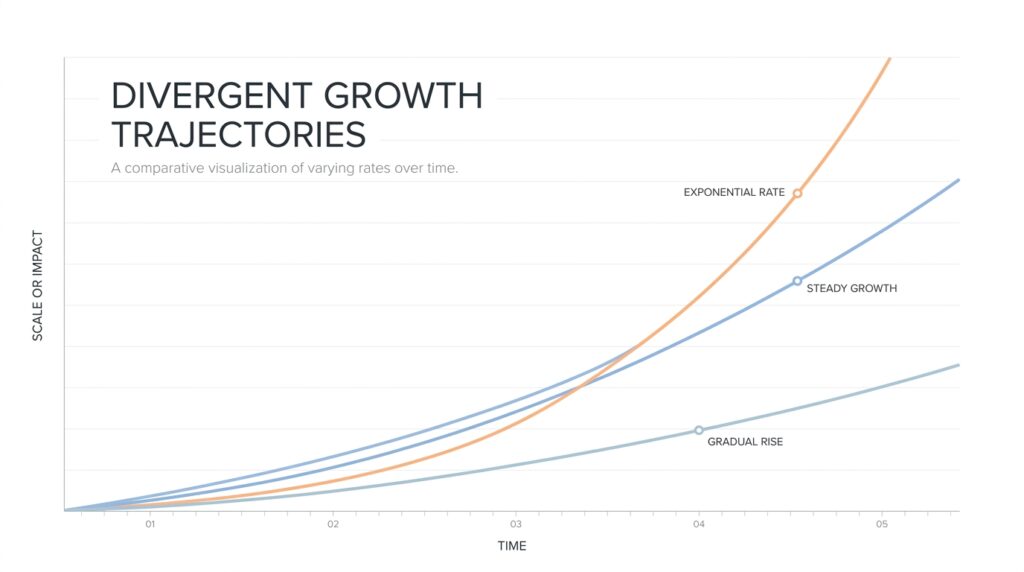
How to do it: Start with the most common complexities: O(1) for constant time, O(log n) for logarithmic, O(n) for linear, O(n log n) for efficient sorting, and O(n²) for nested loops. Free lectures such as MIT OpenCourseWare’s algorithms course materials cover these ideas from a university perspective.
Why it matters: Big-O gives you a shared vocabulary. Without it, you can’t compare two solutions in a meaningful way.
Example: Two nested loops over a list of 1,000 items perform roughly a million operations. A single loop performs about a thousand.
Step 3: Master the Core Data Structures
What to do: Learn arrays, linked lists, stacks, queues, hash tables, trees, graphs, and heaps.

How to do it: Build each one from scratch at least once. Write the insert, delete, and search operations yourself, then test them with small examples.
Why it matters: Understanding how a structure works internally helps you choose the right one for a real problem, instead of defaulting to whatever is familiar.
Example: Build a stack and use it to check whether the brackets in a math expression are balanced. This small project shows exactly why stacks suit that task.
Step 4: Learn Essential Algorithms

What to do: Study sorting (merge sort and quicksort), binary search, breadth-first search (BFS), depth-first search (DFS), and Dijkstra’s shortest path algorithm.
How to do it: For each algorithm, trace it by hand on a small input before coding it. Write down what happens at each step.
Why it matters: Many real problems reduce to these patterns. Recognizing them is a core skill in data structures and algorithms, both on the job and in interviews.
Example: Binary search finds a value in a sorted list by cutting the search range in half at each step, so a list of one million items needs about twenty comparisons.
Step 5: Learn Common Problem Patterns
What to do: Group problems by the technique they use.
How to do it: Focus on a handful of patterns: two pointers, sliding window, recursion, greedy methods, and dynamic programming. Solve three or four problems for each pattern before moving to the next.
Why it matters: Pattern recognition is faster than starting from zero each time. Once you see that a problem is a sliding window problem, the solution path becomes much clearer.
Example: Finding the longest stretch of a list where the values add up to a target can often be solved with a sliding window, avoiding a slower nested-loop approach.
Step 6: Practice on a Steady Routine
What to do: Solve a small number of problems each week, consistently.
How to do it: Try two or three problems a week. Before writing code, explain your approach in plain language. After solving a problem, note what you would do differently next time.
Why it matters: Consistency builds recall. Short, regular sessions help concepts stick far better than occasional marathons.
Example: On Monday, practice one array problem. On Thursday, try a tree problem. Spend a few minutes reviewing both on Friday.
Step 7: Apply DSA to Small Projects
What to do: Use what you’ve learned in practical builds.

How to do it: Try projects like a search autocomplete feature using a trie, a “top 10” leaderboard using a heap, or a tool that finds duplicate files using a hash table.
Why it matters: Projects reveal the trade-offs that practice problems hide. They also give you something concrete to show employers and clients.
Example: A small Python script that scans a folder and flags duplicate files by hashing their contents. It’s useful, it’s easy to explain, and it demonstrates real DSA thinking.
Step 8: Plan Your Future Development
What to do: Connect DSA to a specific direction in your career or business.
How to do it: Choose one or two focus areas, such as backend development, data engineering, mobile apps, game development, AI tools, or freelance web work. Then identify the DSA topics that matter most in that field. For example, a data-focused developer may prioritize heaps and graphs, while a front-end developer may focus on efficient state management and search.
A practical plan for the next six months might look like this:
- Months 1–2: Core structures and Big-O.
- Months 3–4: Key algorithms and common patterns.
- Months 5–6: Small projects tied to your chosen field, plus regular problem practice.
Why it matters: DSA becomes far more valuable when it’s linked to real work. A clear direction keeps your learning focused and makes your portfolio easier to understand.
Example: A remote freelancer who builds e-commerce sites could study hash maps and sorting, then create a small product-filtering tool as a portfolio piece. For more practical guides on building technical and digital skills, browse our digital skills guides.
Keep in mind that learning timelines vary. The plan above is an estimate, not a promise of results.
Common Mistakes to Avoid
Many learners struggle with data structures and algorithms for predictable reasons. Here are the most common ones and how to fix them.
- Memorizing solutions instead of understanding them. Solution: After reading a solution, close it and rewrite the approach from memory.
- Jumping between too many topics. Solution: Finish one topic before starting the next, even if it feels slow.
- Ignoring Big-O. Solution: After every solution, state its time and space complexity out loud.
- Practicing only easy problems. Solution: Mix in medium problems once you’re comfortable, since they build real problem-solving skill.
- Skipping the explanation step. Solution: Explain your approach in writing before coding. Gaps in understanding show up quickly.
- Quitting after a bad week. Solution: Track small wins in a simple notebook so progress stays visible.
Useful Tips for Beginners
- Start with the basics you already know. If you use arrays daily, begin there and build outward.
- Draw your data structures. Sketching a tree or graph on paper makes it much easier to follow the logic.
- Use a timer. Give yourself 20 to 30 minutes per problem. Then review the solution if you’re stuck.
- Keep a solutions journal. Record the pattern, the key insight, and the complexity for each problem you solve.
- Practice explaining out loud. Talking through your approach is excellent preparation for interviews and team discussions.
- Use free resources wisely. Combine a structured course with hands-on practice rather than only watching videos.
- Pair DSA with a project each month. Applied practice turns abstract knowledge into a portfolio you can show.
Frequently Asked Questions
Are data structures and algorithms hard to learn?
They take time and patience, but they’re learnable with a clear order and regular practice. Most learners find the early concepts easier than the later patterns.
Do I need DSA for every programming job?
Not always. Requirements vary by role, company, and region. However, DSA knowledge helps you write efficient code and solve problems in almost any technical position.
Which programming language is best for learning DSA?
The best language is the one you already know or can learn comfortably. Python and JavaScript are popular choices for beginners, while Java and C++ are common in technical interviews.
How long does it take to learn DSA?
It depends on your starting point, time, and goals. Many learners spend several months building a solid foundation. This is an estimate rather than a guarantee.
Final Thoughts

Data structures and algorithms give you a practical way to think about speed, memory, and problem solving. They help you write software that holds up as it grows, and they make you a stronger candidate for technical roles and freelance projects alike. Start with one language, learn Big-O notation, build the core structures, and apply what you learn in small projects. Then connect your practice to the field you want to grow in. Which step will you start with this week?